This blog won't make much sense if you don't read this article first. It's a review of book that is a discussion between an anti-religion atheist and a progressive Muslim. It just came out so I haven't read it yet, but I'm familiar with one of the authors. I’m not familiar with Irshad Manji, or her TED talk, but I don’t deny she’s accurately describing uncivil behavior. I’m sure her positive assessment of Harris’ new book, co-authored by Maajid Nawaz is also accurate.
The article begins where the book does and where the world is at, that is “interpretation is everything”, and there are a lot of people who believe their interpretation is the only correct one. They don’t even accept that their's is an interpretation, but simply a statement of truth that has been revealed and is beyond question. A world with enough weapons to destroy all living things can’t survive with that sort of thinking.
It falls on non-Muslims from secular nations to understand all the distinctions of political, revolutionary and militant Islam and how discrimination exists even in liberal Democratic states and how that affects Islam. I’m less qualified on Muslim culture, but don’t think it is beyond reason to expect Muslims to understand how their own culture is incubating the misinterpretations that lead to what Nawaz calls “Islamism”. Harris, a product of a secular liberal democracy, has no problem pointing out the influence of religious beliefs on a group like the Islamic State, and wonders why more liberals don’t join him.
At this point, Manji goes a bit off the rails of reality and says Harris and other atheists don’t make enough noise about hatred toward Muslims. From what I know of Harris, he has standards and values and he applies them evenly. When Manji says, “The caricature of faith to which some atheists resort is proof positive” (of the irrationality of humans), I think she is pulling the cover back over Islamist extremism. That cover has been used to gain sympathy for decades. It’s one thing to get sympathy for oppressed people, yet another to expect sympathy of cultural differences that break universal norms.
There are clear differences between a violent act that draws attention to the plight of the oppressed and the acts of an oppressor attempting to gain or maintain power. People use faith to justify violence, that’s not a caricature. Manji needs to clarify what she is talking about, because it doesn’t work as support for her argument here.
Manji really fails in her analysis of Nawaz’s solutions. She says “ideas are abstract, a feeble bulwark against the emotional comfort of belonging to tribes”. The “ideas” of human rights and democracy, are much less abstract than believing in a savor or worshiping a prophet. She admitted it’s all about interpretation earlier, but now seems willing to say that’s fine as long it’s comforting. Se commits the fallacy of caricature that she just put down when she says by “secular” Nawaz meant “American separation of church and state”. That is hardly unique to America and hardly the definition of secular. Again she needs to explain what the problem is here, beyond simply saying it can become dogma.
Manji attempts to explain herself using quotes from Jonathan Sacks, a poor choice in my opinion. The quote from him, “no society has survived for long without either a religion or a substitute for religion,” ignores the historic context of what religion has been and why it has had such staying power. There are many people finding meaning and identity and participating in something larger than themselves without reciting a creed that they don’t fully believe every Sunday or Friday or whatever their holy day is. Society has not just survived, it has thrived because we stopped allowing Kings to tell us who to worship and who to kill because they worshiped differently.
She goes on to explain Sacks’ new rereading of Genesis. Something I have grown so tired of I can no longer find the energy to even address. A rereading of ancient scripture does not erase all the other readings. It doesn’t remove the more obvious meaning of the words. Whether or not the obvious meaning is the correct interpretation is not the point. If you continue to treat an ancient story of unknown origin, passed through multiple languages as if it contains a truth that overrides more contemporary philosophy, we’ll continue to have the same problems we’ve always had. We’ll continue to have these cryptic messages lying around waiting to be misinterpreted.
Somehow, Manji admits this while saying Harris is missing the point. She quotes Sacks, “fundamentalists and today’s atheists” both ignore “the single most important fact about a sacred text, namely that it’s meaning is not self-evident.” Trying to interpret the Bible better is not a solution, that’s the problem. The problem is a rabbi can obfuscate a discussion about being civil by saying we should read the Bible, but we should read it the way he says instead of the way a million other people say, and that should end the argument. I don't know why Manji doesn't see this is just starting a new argument.
And that is not the low point of the article. I hang my head when I read stuff like this. Manji continues to say Sacks has the solution, which is teaching more people about his interpretation of the Bible. Although she (Manji) admits, “But as he (Sacks) admits early on, ‘decades of anti-racist legislation, interfaith dialogue and Holocaust education’ have not prevented the mess we are in. Why would it be different now?” What messes are they talking about? The Berlin wall is down, more and more people can vote, I can travel to Iran, there are whole organizations where Jews and Palestinians work together, and fundamentalists are increasingly disparaged. Perhaps the problem is Manji is doesn’t know what success looks like.
If people are reading scripture and finding peace in it, great, but they should do it on their own time and make no demands of others to participate in their study beyond the normal marketplace of ideas. That is, their ideas should stand or fall on their merits. They don't get special considerations because of their age, their cultural acceptance, and certainly not for their claimed divine source.
She does end on a positive note and reminds me to be respectful of her ideas, so I’m open to feedback. I have seen other more supportive statements from her of Harris and Nawaz's work. She also reminds us of how Western Christianity went through brutal wars before it was reformed. That’s a lesson that I think we have forgotten and are learning it again alongside our Muslim brothers and sisters. We can sit idly by and hope they work it out or we can share our stories and work together toward a more peaceful world.

Thursday, November 5, 2015


Thursday, October 29, 2015
Deep Time
Oliver Sacks died recently. In memory of him, Neil DeGrasse
Tyson replayed an episode of his show about him for Star Talk. You can look
that up, I’m trying to cut back on linking things for people.
One of the stories that Sacks tells is about his mother when
he was a kid. They were walking around in their yard and she told him about
bees fertilizing flowers. A bit later, they saw a Magnolia tree that was being
fertilized by beetles. Why would one thing be fertilized by bees and another by
beetles? Her answer was one that most mothers couldn’t provide, particularly at
the time Oliver was a boy. She said it’s because that tree evolved 80,000 years
ago when there were no bees, and it stuck with the beetles as its pollinator.
Upon hearing that, it gave him a rather profound experience
of deep time. It’s difficult for human beings to comprehend the space of their
own lifetime, let alone the lifetimes of ancestors they know about. Imagining
beyond a few hundred years or into the thousands is almost impossible. We can
demonstrate that things happened, show evidence for it, but keeping it straight
in our heads, we just aren’t wired up for that.
The experience Sacks had is one that few people his age
could have had, due simply to lack of knowledge. Most mothers didn’t know this.
Fathers either. Even parents today would have trouble googling the answer, if
they even noticed the beetles on the Magnolia tree. And if you go back just to
your great grandparent’s time, no one knew this. No one was trying to comprehend a 13.7 billion year old universe,
because we didn’t know it was that old. We didn’t even know where bees came
from.
When I’m asked why I prefer science over religion, I’m
sometimes asked why I prefer knowing all the answers over mystery. Well, I
don’t have that preference. I don’t know all the answers so there is plenty of
mystery. The question is then fine tuned to why I only accept things that are
proven. Well, I don’t do that either.
I wake up in a universe full of unknowns every day. I
navigate an uncertain future. I assume the sun won’t explode today, but I can’t
prove it. I trust someone is keeping an eye on that and would let me know if
they thought it would happen anytime soon. If we discover something today that
no one expected, then I’ll work on including that in my point of view and deal
with all the new questions I’ll have because of it.
More recently, a pastor from my last church put this quote
on facebook:

Church never made me aware of evolution and the amazing
series of unlikely events that led to a tamarack tree turning golden brown then
dropping it’s needles in the Fall. At best, someone would occasionally remark
on the beauty of a tree or something else amazing about “God’s creation”. I never saw how wonder is inspired by assigning
nature a role of simply part of God. That puts an end to wonder. It only
shifts wonder from the many discoverable details happening in front us to
something that can’t be found. I’m using their definition here, gods are
defined as something you seek, but you can never know or understand them completely.
Eventually it came to seem like a trick. Something to draw
me in. Something I was supposed to get closer to if I read the next book or
attended the next retreat, but like a radio play that always has a cliff
hanger, it was more important to create a question than to seek an answer. Why
do we need a god to cause us to wonder anyway? Aren’t we doing that already? We
can see curiosity in other animals. We can see in artifacts when humans started
to make idols and honor their dead. We went from primitive religions to the
complex. We weren’t haplessly bumping around not wondering about anything until
a shaman came up and told us to.
In Herman Hesse’s Siddhartha, the man seeking enlightenment
sits on a bridge and stares at the river flowing under it for days. He does
this after living a long life with successes and failures. As a young man, Malidoma
Some was told by his elders to stare at a tree for hours until it talked to
him. Neil DeGrasse Tyson attended a planetarium when he was young and it inspired
a life long love of understanding the cosmos. There’s nothing like that in the
Bible. If anything, these fit Biblical descriptions of witchcraft or the dangers of philosophy. If learning by observing nature, by wondering what it can tell us, if that’s
witchcraft, get my broom.
Thursday, October 22, 2015
8 points of Progressive Christianity

This one flew by my virtual desktop the
other day. I don't remember whence it came. It sounds nice at first
glance, and you know there is a “but” coming after that, don't
you? By time you get to the bottom, it sounds like all the good peace
and harmony things in one tidy list. They didn't even try to force it
to 10 items. Kudos.
I'll start at the bottom, where all
those nice things are.
Items 4 through 8 are just basic human
dignities. No society can survive for long without them. Even a
repressive regime tells people they have these rights. George W Bush
said he only choose war because that's what he needed to do to
achieve peace. The language may lean toward the “liberal” end of
the spectrum, such as “restore the integrity of our Earth”, but
even those who claim dominion over the earth will usually say they
are stewards.
I'll give a few extra points for item
5, “search for understanding” and valuing questions. Not
everybody gets the importance of that. Of course saying that is
different than actually responding to a question that challenges your
world view in a truly open minded and respectful manner. But I don't
need to get into the problems of implementing the list.
Moving up to item 3, atheists are not
included. Probably because it implies an end to all of that
questioning. You could say that's true, but only for religious
questions. Atheists of course continue to ask all the questions that
everyone else does, like why are we here, what's right, what's good,
and what's for breakfast. I have enjoyed spending time in awe and
wonder with people who had no idea I didn't believe in their god.
Atheism leaves wonder and openness intact while concluding that
enough work has been done on all existing theories of Christianity.
I’m not interested in a church that
accepts atheists anyway. I’m interested in a community that
accepts everyone for who they are. This doesn’t mean anything goes.
It means whatever the community is organizing to do, it’s rules
about who can join in are related to reaching that goal. Churches
have goals and committees and functions, but if you want in, you have
to pledge allegiance to a character in a book. You have to say you
believe that things in that story are true. Most people do it without
their heart really being in it, but if someone comes along and
questions what’s in their heart, the wagons begin circle very
quickly.
At least that's how it is for me, maybe they had some other atheists in mind when they left them
off, and the item does say “ALL”, so that's nice.
Now I need to jump up to Item #1
because #2 doesn't make sense without it. This list starts with the
same old barrier that has been around since the beginning, “believeth
in me”. I realize that without that, there's no point in having
this be about Christianity, but with it, why call it “progressive”?
If you want an open community like you say in #3 that accomplishes
the things in 4 through 8, why not just say you are a progressive
“org” and then say something about welcoming faith traditions if
you want. It would really simplify things.
In Item #2, it's almost apologizing for
#1. After saying Jesus is the path to the Sacred and Oneness and
Unity, it says that there are other ways to get there too. This one
also has implementation problems. Just where can you go for this
other wisdom? I went to a church that had a Ojibwa pipe ceremony in
the basement once, Sufi dancing now and then on a Saturday night, and
read from the Tao Te Ching every Sunday. But that was about it. And
that's the most progressive church I've ever heard of. Even
Unitarians tend to stick to Western Christian ideas.
The general feel I get from this list
is, you’re fine with me choosing any belief system, but heaven
forbid I choose a system that isn’t based on beliefs at all. Back
when I taught Sunday School, I put a poster up in my class that had
15 different versions of what Christians call “The Golden Rule”
from a variety of faith traditions, and Confucius, who made no
supernatural claim. I've never seen that poster in any other church.
I've seen high ranking religious leaders who were unaware that there
were other versions. And something like that is not really much of a
stretch. I can't imagine an adult Sunday School bringing Hume to
their discussion on ethics or Sam Harris to their discussion of free
will.
The question not addressed in this list
is, what are you trying to accomplish? Is it the stuff in the second
half or is making a statement about being inclusive as in 2 and 3
important, or is it all about Jesus and the Sacred and Oneness? Just
what those capitalized words mean is a problem for me. It seems when
I ask that question, they lead to the other points, so why not just
dump the first 3? It would be much easier to understand if you just
said you were a group of people that wanted to save the world. That's
enough to set you apart.
The only honest answer, the only reason
I can see to why you would start off with a belief statement, is that
you think that is of primary importance. Nothing else here explains
why that is important, and no church I've ever been to or theology
I've ever heard of does anything but make that as an assertion. It is simply stated that Jesus leads to these things and the only way to find out
is to try it for yourself. If you don't get it, you're doing it wrong
and you're not in the club. I don't see what is so progressive about
that.
Friday, October 16, 2015
Northwoods Naturals Red Spritz

 This is a "non-alcoholic beverage". Water is a "non-alcoholic beverage", but they don't usually mention that. So what makes this one different from "red pop". I looked up the website, but they only talk about their alcoholic beverages there, so I don't have nutrition information on this one. My guess is though, that it's low in sugar. You might say it's a "dry" pop, or soda, depending on where you live. Or, as the label says, "not-too-sweet". Any of those descriptions work. It was close to a wine spritzer taste, but no alcohol bite of course. The red taste was more like red grapes, not that strawberry candy taste you get from most red pops. I found this The Duluth Grill, an excellent place to go anyway, and now, one more reason. Hopefully I can find it somewhere else too because I'd really like to enjoy one of these at home.

Secrets of Proenneke Cabin
"He gestured vaguely and mentioned
a few landmarks along the way, being careful not to make it too
easy."
I read a version of the legend of
Parceval just before heading off to Alaska this summer. My trip was
not legendary, except perhaps in my own mind. The words above
however, taken from that story, were with me. The scene is a young
Parceval, living in the woods, unaware of Camelot. Two Knights appear
and see something in the boy, but only give him enough to awaken his
sense adventure.
The attitude toward hiking in Alaska is
different than most places I've been. Most parks and wilderness areas
will have a variety of warnings and requirements. Where I went in
Alaska, there were no permits required, I didn't need to check-in
anywhere, if I hadn't initiated contact, they wouldn't have known I
was there. There was no signage, no trailheads, no warnings posted.
Part of this is, I'm sure, due to
the sheer enormity of the space and the barriers that have to be
overcome to get there. Most of the filtering out of people is done by
nature. If you manage to get by the mountains, the snow and the
freezing water, there are the bears. Let's hope the Alaska Department
of Natural Resources isn't thinking that they want to throw you the
wolves, or bears, or whatever else might be out there, but they
definitely expect you to figure out more for yourself than your
average walk in a park.
 In Minnesota, before entering the
Boundary Waters Canoe Area Wilderness, you are required to get a
permit and watch a video about hanging a bear pack and "leave no
trace" camping. When I hiked the Grand Canyon, there were a lot
of signs up about dehydration and how it is most common that fit
young men are the ones who succumb to it, because they are most
likely to think they won't. There was nothing like this for the Lake
Clarke Wilderness. There also weren't trails.
There is a sketchy explanation of the a
few hikes around the Proenneke cabin area on the NPS website.
http://www.nps.gov/lacl/planyourvisit/low-pass-route.htm
The hike I originally planned involved walking along the lake shore
and, as their description says, "you should be able to discern
which drainage will lead to Low Pass because it's the most
significant one in the vicinity...". Now, without surveying the
entire area, I don't know how you would determine "most
significant", worse, as far as I can tell, the directions start
off sending you east, when you should go west. After that, they say,
"follow the tundra ridge to the pass."
I wanted to make this a loop route, and
the Low Pass description says that at some point, that will lead you
to the Hope Creek route. That description refers you to the Hope
Creek route description, which says that at some point, it will lead
to the Low Pass route. That's as good as it gets.
I have some experience with reading
topographic maps, but if a pass has a name, I don't know how you find
it without that name appearing on the map. I read a few other
descriptions written on wilderness guide websites, but I would expect
them to be vague, since they want you to pay them for what they know.
I thought I had hit pay dirt when I found someone's homemade map, a
satellite photo with a big arrow on it that said "Low Pass".
I matched that up to my topos and found a wide area that was at 3,000
ft, surrounded by the 5,000 or more foot peaks. This seemed to be
"significant".
In case I sound like someone who was
proceeding foolishly, I was, but I wouldn't have tried this without
someone who had some experience along with me. Luckily I have a
brother who lives in Alaska and has worked in the brush. He reviewed
my plan and said it was aggressive. Actually he said, "whoa,
whoa, whoa". Anyway, we changed the plan to the Hope Creek
route. This one proceeds due south from the cabin, following a creek.
It even starts out with some trail, but that trail quickly starts to
break up.
By the way, I looked for books on
hiking in Alaska. I checked guide books, there was less in them than
what I found on the NPS site. On the drive to Homer, we stopped at a
map shop. Nothing. I found a copy of a National Geographic map of
Lake Clarke park on sale on amazon. It was $350. Apparently paper
maps are a collector's item. I was hoping maybe one of the float
plane operators I talked to would give me a little free info, but
most of them hadn't even been there.
Crossing the mountains on the way there
gave me some appreciation of what I was getting into. It's a mere 20
miles or so on the map, but looking down on the cliffs and snow
covered peaks, I knew I wouldn't be walking out of there if anything
went wrong. It was a little bit of a relief when we were greeted on
the radio as we flew up into the Twin Lakes valley. We landed right
at the cabin, which is just a few feet from the water and were
greeted by a rainbow that also came right down to the water. I
realized that was something special when I saw how excited the park
ranger and float plane pilot were. I would have thought that was
something they see every week.
After spending some time in the
historic cabin and getting the obligatory picture in the doorway, we
tried again to get intel on the hike from our park ranger. We got a
couple more details on the Hope Creek route, but it ended with the
same "then you get up on the ridges and you can follow them over
to Low Pass." She literally waved her hand over the map at this
point. Once again, "whoa, whoa, whoa." But that was the
best we were going to get.

When we got back, we met one more park
ranger, and that one finally pointed right to a spot on the map and
said, "that's Low Pass". It was the next valley over, much
more narrow than the one I had found and another 1,000 ft higher. I
could also see by looking at where the streams started, that there
had to be ridges between them, and by following those high spots, it
would lead you right to the ridge we had stood on above Hope Creek.
I didn't actually go there,
so don't take these directions as anything close to a suggestion that
you go there and follow them. I can't know what was over the high
point that I saw. Just before we got to the ridge, we had a choice
between a 200 ft mound of boulders and a scree slope. I choose poorly
and could have easily lost a lot of progress or been injured sliding
down that. Some scree is listed on maps, but most of it isn't. If a
description of an Alaskan hike says "This route crosses a couple
steep scree slopes", as the Low Pass description does, you
should take that very seriously.
There are many things to do
around the Proenneke cabin. There is a small camp site right there
with metal caches to keep the bears away from your food. You can hike
the shore line. There is one rustic lodge on the opposite side of
Upper Twin Lake. Port Alsworth is not far away on a large lake with
many lodges. Many people fly from there and visit the area for a just
a couple hours. I would recommend any or all of those. Whatever you
do, don't miss enjoying the incredible scenery.
Tuesday, October 6, 2015
In 1493, Columbus took everything he could see
It’s one of my favorite time’s of year again, when people
talk about how Columbus
ruined everything. Don’t get me wrong, I’m no big fan of the European take over
of what is now called the Americas .
I’m also not a fan of bad history. According to the memes that come out this
time of year, Columbus
invented slavery.
There is no question that the particular brand of slavery
that existed from Africa to America
and included the natives in the Americas
was particularly horrible in human history. There is no question that
Christianity supported slavery and it was in turn supported by the Old
Testament. It is also unquestionable that slavery has been a part of every
civilization. It’s elimination is very recent and very unique. The colonizers
that began with Columbus
are not unique at all.
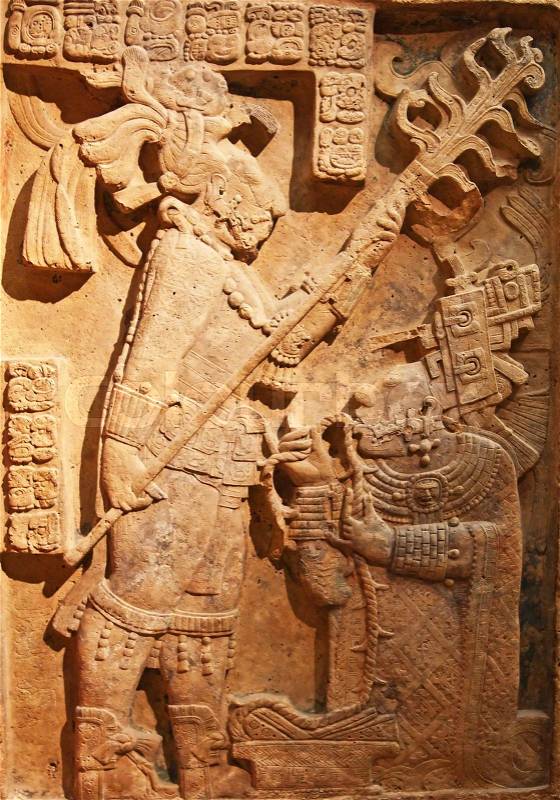
Slavery in the Americas
began thousands of years before Columbus
ever got there. And I’m not talking about the Vikings. Native tribes conquered
and enslaved each other. I’m not going to provide links, by the way, since this
is too well known to bother. Also well known is the participation of Africans
in the African slave trade. None of this makes any of it right. That something
has been done throughout human history is not an argument for it being normal,
ethical or intractable. People who took slaves were always wrong. They were
also products of their environment.
One easily misused statistic is the number of people who
died in the centuries following 1492. It was on the level of the Nazi
holocaust. Pre-Columbian population figures are a little hard to come by, but
deaths were in the millions. We know there were conquistadors sweeping across
the southern continent and small colonies moving in along the east coast at
this time. But millions of deaths spread across vast stretches of territory
that were unmapped by Europeans have to be accounted for. The only sensible
explanation is disease.
The Americas
were first populated by people crossing the Bering Strait
land bridge 10,000 years ago. Generations of living in extreme cold in Siberia
and the tundra of the Americas
killed off a lot of immunity that people in Europe
maintained. Europe and Asia have cows, pigs
and horses and constant contact with those animals weeded out anyone not immune
to the diseases they carry. When they came back in contact with their cousins
that they had parted with so long ago, they brought those diseases with them.
No, I’m not ignoring that this was later done deliberately,
but that was much later. Missionaries that gave Indians infected blankets did not
exist until colonies were well established. Missionaries can’t exist at all
without a strong military presence protecting them. The history of that is also
confused and sometimes exaggerated, but it certainly had nothing to do with Columbus .
Neither am I ignoring that by today’s standards, Columbus was a wack job.
I recently read “Columbus and the Quest for Jerusalem ”. The title
alone grabbed my attention. He never went to Jerusalem ,
but according to his own diary, his intention for finding a route to India was to enrich Spain
and the Catholic Church so they could re-conquer Jerusalem . If you remember, Jerusalem was under Muslim rule at the time. Columbus would out
fundamental any fundamentalist of today. And why not? That’s all there was.
There was no discussion about freedom of religion, you took the religion of
your kingdom, or you got out of there, alive if you were lucky. If the Pope
said slavery was okay, it was okay. Martin Luther was only 9 years old. It was
a different time that we can barely understand. Having Christians in control of
the birthplace of Jesus was vitally important to the survival and future of Columbus ’ culture. The
idea of Jews at the Wailing Wall, the sound of the Muslim call to prayer and
tours of Jesus’ tomb all in one city would be unheard of to him.
Despite his confusion about the size of the earth, Columbus was a decent
navigator, he did make contact with another culture, and he did find gold. If
you think any of that was easy, read this story about how he was stranded on Jamaica for a
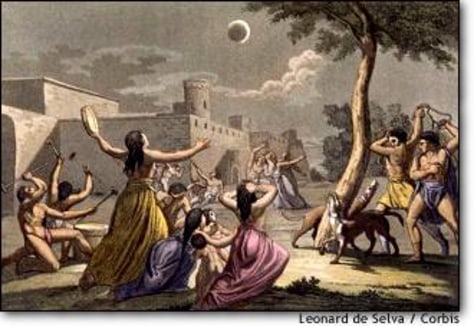
year. A few of his men found their way back to Haiti(then called Hispaniola) in what was essentially a canoe. This was also the time he lied to the natives about controlling the sun when he
knew of an eclipse that was coming. He did it to gain favors from them. Anyone
who tells that story without also telling of how he did it when he was cut off
from anything resembling his civilization, is essentially lying by omission.
Instead of entries about thoughtless treatment, I read of
how he had to leave some men behind on his first voyage and gave them strict
instructions to stick to themselves and not bother the natives. Now, he also
took natives with him against their will, so he was no saint. When he returned
he found the men he had left behind had fought with the natives, and they (Columbus ’ men) had been
killed. Getting their killers to describe what had happened of course would
have been a challenge.
The history of the rest of what happened during Columbus ’ life is, shall
we say, muddled. He was told by Spain
not to take slaves, but he did anyway, even sending some of them back to Spain . There
seemed to be no penalty for this. Even at the time, Ferdinand and Isabella couldn’t
figure out what was going on and had to send investigators. The second voyage
was definitely a military mission and included priests and farmers who
established colonies. Those priests complained that in some of those colonies
the slaves were mistreated. To me today, “mistreated slave” is kind of an
oxymoron. You’ve already taken someone away from their culture and made them
work for free. How is that okay, but there is still a further line that
crosses into “cruelty”?
It is hard to tell from the few records we have, but the
theme of the book I read was that many of the people who were brought to
colonize this new world expected gold to be flowing out of the hills and slaves
to bring it to them. When they found out they had to work, and that the “New
World” had new diseases, they blamed Columbus
for mismanagement. This is when Bobadilla enters the story and puts Columbus in chains.
When the story is told as if everything in Bobadilla’s
letter is true, it sounds strange that Columbus
was released and allowed to return, although he was stripped of his governorship.
It makes more sense when you read accounts of the monarchs who found it strange
that Columbus
arrived at court in manacles. This was perhaps a shrewd political move by Columbus because the
Captain of the ship that took him home offered to remove them. But Columbus wanted his
patrons to see how Bobadilla had treated him. I lean more toward the theory
that Bobadilla wanted to rule the territory without having had to do all the work of
discovering it.
I can hardly summarize a book in six paragraphs and
everything I’ve said comes with a disclaimer that the history is incomplete. My
intention here is to supply a little more background than a painting from 500
years ago or a scrap of evidence with no context. How we treated the people we
called “Indians” in later centuries; cutting their hair, making their language
illegal, killing off the buffalo, all of that is inexcusable. It was also
supported by our government after we had made a constitution that spoke of
freedom and human rights. It was perpetrated by Presidents that we call heroic.
Anyone living in the United
States today benefits from those policies,
excluding of the course many of the descendants of the people who were here
first. We would be better off discussing how that affects people alive today
than either celebrating or denigrating a man we know little about from 500
years ago.
Thursday, October 1, 2015
The Least of These
I occasionally review my posts to see if I said something I want to retract. I don't edit out what I said, but have commented on myself a few times. Recently, at the Lake Superior Free Thinkers regular meeting, we had a philosopher, Shane Coultron, speak who corrected me on something I've mentioned now and then. That is, I have said I can't find a similar statement about the Christian idea of "that which you do to me (Jesus), you do to the least of these (i.e. the poor or sick)."
Turns out that is addressed by modern philosophies, it's just not as easy to find in a short concise phrase like it is in the New Testament. Shane gave me several examples:
Utilitarianism - If you are simply adding up happiness and basing choices on increasing it, you would do well to focus on down trodden, poor, sick people. Their happiness rating is lower. This is born out with sociological data, although there are those communities of people with limited means that are quite happy. Utilitarianism does not make broad generalizations about what it takes to be happy. The important application of it here is that if you focus on those who have the most needs, you will make the most difference in increasing their happiness and likewise increase overall happiness for all. This includes the assumption that even if you are well off, it makes you sad that others aren't. Again, plenty of exceptions to that assumption, but they don't matter to the overall score.
But Utilitarianism has other problems, and I don't like defending it too strongly.
I prefer the more subtle assumptions and laws discussed in what is sometimes called Social Contract Theory. The idea that we came out of the jungle and made agreements to act in ways that are mutually beneficial. In this system, ignoring the needs of any group has a cost. If there is not good reason to restrict someone's rights or to not reward them for their contribution, they can reasonably consider the social contract to be broken. As society has advanced, we have created better peaceful means of addressing these grievances, but many remain.
History shows us how this plays out. Marx's analysis of the cycle of cultures working together to increase their wealth, then that wealth becoming concentrated, then revolution, has strong historical data to back it up. We see it happening again now, but we also see more negotiating under way. Hopefully this time around we will acknowledge "the least of these" and find a way to re-establish the contract.
I'll just mention that Shane said Kant's de-ontological ethics also addressed this issue, but I don't find Kant particularly interesting so I leave it up to you to look into that.
Subscribe to:
Posts (Atom)