Showing posts with label archeology. Show all posts

Sunday, May 12, 2019

Atheism for Religious and/or Spiritual 9

Previous                            First                     

Before I go on, I promised back in the 2nd of this series that I’d talk about the problems of the early Catholic Church. I hope I have spent enough time discussing the Enlightenment era and the flaws in Western philosophy in general. But there are good reasons why I still choose them over Christianity. There are a few things that started gnawing at me about Christianity and the more I looked into them, the more I realized they were foundational problems that could not be solved. That is, they weren’t just cracks in the foundation of Christianity; they were demonstrations that there is no foundation.

The first is the consensus on the existence of Jesus. That’s it really. That is, the entire extent of the scholarly consensus on Jesus is that he existed, and maybe that he was crucified. The dates of his life are disputed, his name is in dispute, everything he said is debatable, let alone what he meant, his family life, if he was a spirit or a man who was inhabited by spirit or if he was born God. All of these questions are played out in the scriptures and some of them have led to wars and schisms (John 14). Holy wars are not cool as they used to be. Claims about what someone did in the past are expected to come with data that can be confirmed and facts that are agreed upon by a number of experts. Part of the statement of the consensus on Jesus is that we can’t recreate any of these details from the documents we have, not the four gospels or with the help of the apocryphal documents.

They spent centuries trying to work back to some original theme and what they discovered was there isn’t one. Instead, we get Peter arguing with Paul (Acts 10), Thomas painted as an unbeliever who repents (John 20), and a fourth gospel that is out of sync with the other three. This was expected and normal at the time the scriptures were written. Authors added to and reworked the stories to bring their new insights to them. But now we have modern history which is expected to be accurate and to let us know when something is uncertain. This leads to a confusing mixing of these two different genres. A historical fact like “Jesus existed” is used to claim that everything written using the name “Jesus” is also historically true. It may be true that Jesus died at the hands of the Romans but that says nothing about how that death washed away sins or the details of how he rose or who found him or who saw him later. The truth of one historical fact has very little effect on the truth of most of what is found in the New Testament.

This leads to the second thing, the order of the New Testament. If that collection of books was simply reordered to the order in which they were written, I think we would all have a very different view of the meaning they are attempting to convey. The first book in the New Testament, Matthew, begins with a birth narrative, connecting Jesus back to King David. That makes sense if you are attempting to tell a story that you think is real. But many believe the story of the virgin birth was concocted later to sell people of that time on the idea of Jesus being God. Gods of that time were born of virgins, so Jesus should be too, so you need a story.

If you want to follow how the stories began and were copied and embellished, start with the Book of Mark. It was written first. It has no birth story. It doesn’t have a resurrection story either. Maybe I should say it didn’t have a resurrection story. Many Bibles have footnotes telling you that the last verses of Mark were added on later, to harmonize it with the other gospels. Matthew and then Luke were written after Mark, sometimes copying, sometimes changing stories slightly, sometimes adding a new story. The gospel of John was written decades later.

To further correct the chronological order, all of the works of Paul need to be shuffled to the beginning. All of them were written and its author died before the first gospel was even heard of. Acts talks about Paul, but it was most likely written by the same author as the Book of Luke. Making sense of the different stories and contradictions is hard enough, but if you were to be presented first with a story of a man who only met Jesus in a vision and mentioned virtually nothing of a family or any earthly travels, it would be disconcerting indeed to then find out about Kings hearing of a virgin birth, to read of encounters with priests, of a man having meals, and telling parables. Was Paul unaware of all of this? For me, it’s led me to consider that this is a legend that developed, not a history that was poorly documented.

This project of ordering the books chronologically is complicated by the difficulty of assigning dates to the writings. That is an inexact science, and the authors sometimes attempted to mask who they were and when they were writing. The complete reordering might begin with the “undisputed Paulines”, Romans, 1 and 2 Corinthians, Galatians, Philippians, 1 Thessalonians, and Philemon. These would be followed by Mark, Matthew, Luke/Acts then John. The job would get more difficult after that as we would need to sort out the psuedepigrpaha (like 2 Thessalonians), the works that were falsely attributed to Paul or other figures of the time. These were either assigned authorship in error by people who didn’t know any better, or deliberately claimed to be an author other than the actual one as a way to legitimize the message.

This is not just a New Testament problem either. Deuteronomy is the fifth book in the Old Testament, but is now known to have been written much later. Maybe most significant is the story of Eve tempting Adam with the apple. Besides simple facts like no apple appearing in the Bible, the story itself might not be a creation story. It may have been written earlier but it was given its place in the Bible by the people who assembled it, not some original author attempting to write a coherent narrative. It’s a folk tale, probably not intended to be an account of the first man and woman. So the entire reason for Jesus, to save us from the sin that got us kicked out of the Garden of Eden, is a mistake of some scholars in the centuries around the Fall of Rome who received a text and did not question its authorship or authenticity. They were told Moses wrote it and that was good enough for them.

With all of these competing narratives and a lack of scholarship, we arrive in 381 AD at the third thing. In that year, soon after Theodosius became emperor of Rome, he declared that he knew the correct version of all of this. Rather than honor other ancient traditions and allow for freedom of expression of a plurality of religions, it was time to get everyone under one system. To do that would require enforcement of these Catholic ideas using his military power and in many cases, the burning of anything and anyone who didn’t agree. This included not just pagan or Jewish places of worship, but Christian churches that didn’t preach the correct doctrine.

The page Theodosius gets at Catholic.com calls him a “just and mighty emperor” and puts it this way,

“In January, 381, the prefect had orders to close all Arian chapels in the city and to expel those who served them. The same severe measures were ordered throughout Theodosius’s dominion, not only against Arians, but also in the case of Manichaeans and all other heretics.”

It tries to soften exactly what these “severe measures” were but that’s why you shouldn’t get history from only one source, and especially from a source that is biased. By the way, “Arians” here have nothing to do with Nazis. The big problem with them was they were not Trinitarians. They said Jesus was subordinate to God, not part of him. My problem is no one can explain what the Trinity is. Instead of discussing it that though, Theodosius just said he was bored with all the talk and started killing people.

This wasn’t just an establishment of a strong military rule or just a wedding of religion with government it was a closing of minds that had been developing philosophies of democracy and science for centuries. In his book, Confessions, from around 397 AD Augustine wrote, “There is another form of temptation, even more fraught with danger. This is the disease of curiosity. It is this which drives us to try and discover the secrets of nature, those secrets which are beyond our understanding, which can avail us nothing and which man should not wish to learn.” Granted I’m taking this out of context in this short piece. He was confessing his thoughts as a young man and how they led him away from a more pious life. However, from archaeology we can see that technology stopped advancing around this time and we see less works of literature over the next few hundred years. I’m not blaming the Fall of Rome on Christians, but they didn’t prevent it and didn’t even seem troubled by it.

You should check all of my facts here and draw your own conclusions. Nothing I said here necessarily cancels out everything the Church has ever done. It shouldn’t change your relationship to your favorite parable or the community you consider your spiritual home. For me, it led to questions and it was the reaction to those questions from church leaders that eventually led to my lack of a belief in the divinity of Jesus and ultimately anything supernatural.

Sunday, December 10, 2017

Behold, I bring you tidings of great joy

We all know the verse that Linus recites at the climax of Peanuts Christmas. Charlie Brown is questioning what Christmas is all about. Linus ends his reading with “Peace on earth and goodwill toward men.” That’s great, and by 1965 when that was made, most Christians throughout the world agreed this is the meaning of Christmas. Trouble is, this was written before there was the modern version of Christmas and it originally said, "Peace on earth for those whom God likes." You need to understand a bunch of Greek and Latin to understand that, but simply, you drop one Greek letter and you have to also change the whole subject/object stuff of the sentence and that’s what you get.

I heard this a few times, and it just sort of passed by me. It’s an interesting artifact of history from a time when there were no copy machines. A simple mistake. No real harm done. Except, when you start digging through the various copies throughout history, it was not a mistake at all, it was quite deliberate. This didn’t just happen in the third century and now, with better tools of historiography, we are discovering it. This has been known throughout the history of Christianity by the few people who had control of these books. Just like now, where we have neighbors who are happy to break bread at their ecumenical gatherings and multi-denominational dinners and also fundamentalists who want holy war, there were people who said they wanted peace in the world and others who knew their scripture said only some of them should see that peace. Sometimes it was the same people, saying one thing while knowing the other.
http://ntvmr.uni-muenster.de/manuscript-workspace?docID=20022

The difference between now and then is the balance of power. For the most part, those who truly believe in tolerance and peace are in power. But every day we see signs that it is still a struggle. Mainstream religion may appear to hold these values, but the facts of these discrepancies in our manuscripts raises some questions. If you accept the expert opinion on this, if you accept that people who spend their days pouring over these fragments of paper and studying the ancient languages actually got it right, then why don’t we change the Bibles? That is, correct them to what they originally were. Even if we don’t change the Bibles, why don’t preachers tell us this is only what modern people believe, not the people who first wrote the words. Those were the people who were closest to the events that inspired the words. If we are saying that we should listen to what they say, that their ancient wisdom has value, why shouldn’t we be listening to what they really said?

There are a few ways to go from here. We could believe that peace should be for only a select group. We can believe that something from outside of the physical universe somehow guided these hands and created these words on paper once, then had another hand erase it or misspell it and somehow that series of changes was slowly revealing this truth to us. We can believe that the original authors had some special vision, maybe divinely inspired or maybe just some special set of circumstances that they observed that helped them tap into this wisdom. Or, we can believe we are creatures with the ability to reflect on the past and future, trying to figure out what to make of our existence on this lonely planet. There may be millions of other planets like ours, but the universe is rather large, and we can calculate the odds of contacting one of those other planets, and they aren’t good. We might want to figure out how to get along with just each other for the time being.

To put it simply, we need to say that whoever wrote the gospel according Luke, was wrong. And when I say “we”, I mean it needs to come from the people who make a living interpreting this book. Those authors were wrong on this account, and they were wrong about some of the other things they said. We have fought wars based on religion. That includes Christians fighting over the meaning of words like these. We have had Kings anointed by gods and we have died for them. We have believed that the world could unite under one set of laws, inspired by some spirit, and experience a thousand years of joy. We were wrong.

We have found that allowing for borders and respecting the sovereignty of others is a way to deal with our differences. We found we have universal values despite theological differences and tried to create international laws, and sometimes we even got it right. Sometimes, nations put aside their differences to keep one nation from getting out of control and imposing its will on weaker people. It’s rarely pretty, but we muddle towards a world where we talk more than fight.

Instead of looking to something that was said hundreds or thousands of years ago, we look to what can be demonstrated by our senses. We extend our senses with tools created by an understanding of basic principles that have been tested over and over again. We know the sun has come up every day regardless of what sacrifices were made, so we don’t make ritual sacrifices anymore. We know the earth compressed the organic material from millions of years ago to give us fuel to light our universities so people can work late into the night curing what was once called a curse. To make that happen, we also know that we need to have some degree of peace with the people who are sitting on a lot of that organic material. The same goes for copper and materials needed to create more sustainable energy infrastructure. What is important is, so far, we just have this one planet.

You can accept what I’m saying or not. You also have the tools to research this yourself. The manuscripts with these words on them have been cataloged, numbered, digitized and are available to you free right now. The 1% of today only have power over us because we don’t do this work. The 1% in the time of Luke had a much easier time of it because they were the only ones who could read at all. The fact that I learned these things is the result of the accumulated knowledge I mentioned above and the cooperation of people across borders. The internet began as a way for scholars to share their work. It has become a way to avoid the lines during the Christmas rush. How it will be used tomorrow is our choice.


Monday, February 8, 2016

Science of Peace


I'd like to make two observations that make a great difference in my worldview.

We are star stuff and we care about each other.

The second one is simpler, but relies on the first. I’m going to accept that we care about each other as truth without providing an explanation because the explanation is complicated and relies on assumptions and is ultimately un-provable. Call it an assertion if you want, but I call it an observation because I observe it in myself when I see any kind of story from a commercial designed to tug at my emotions to any of the great and timeless theatrical presentations or novels you might want to name.

It is not necessary to explain it, because “it” explains our mere existence. The complex organisms that we are don’t survive very well without a lot of nurturing. The first few years are literally impossible and to be anything other than an equal to any other animal in the kingdom takes several more years of attention and intervention of the natural tendencies we have to get ourselves into trouble. Anyone who has engaged in the simplest conversation with a child, who asks “why”, knows how frustrating it can be to deal with all those parts of the brain left over from earlier stages of our evolution. At some point in that conversation the adult starts to wonder why they are bothering to continue with it.

It can be logically concluded that we would not exist if we didn’t care about each other on some level that is so basic we can’t explain it with logic. At best, we would be a minor species, slightly more adaptable than others, a little better at hunting, but still vulnerable to the larger carnivores and always vulnerable to natural disasters and just as unaware of the age of the universe or its future as any other animal. We certainly would not have vehicles running on fuels or universities or grain storage or an understanding of invisible things that can poison our water. Life would be idyllic and without worries part of the time for some and a living hell for others the rest of the time. Large populations would disappear and no one would know why or for that matter, would have ever known about them it all.

We can despair in the fact that there are people who live in horrid conditions, that despite our knowledge of the universe and our ability to affect our environment, we still allow that to happen, or we can notice that we are the ones who care. We can feel small against a vast and mostly inhospitable cosmos circling above at speeds we can ‘t comprehend or we can feel big enough to do something for someone on the other side of this one little planet. We can get whatever sense of satisfaction that might bring even if that feeling is brief and only makes us more aware of the enormity of the problems that there are to solve. We can be thankful that we get to feel at all, that we have the luxury of grieving for another while we sip our coffee before heading off to whatever meaningless work we have to do for the day.

It is those moments, whether they are spent alone or with others who feel the same that bring the meaning to those day to day tasks. If you are composing a sonnet to rival Shakespeare or sending out a memo about some obligatory training session, your words, your expression of who you are, is fleeting. Very few people are remembered beyond a century and even those are not preserved well. It’s unfortunate that we hold those memorable moments in history above the moments that we have with each other. It is those moments with each other that build the foundations that give us the reason to have a history in the first place.

Civilization did not begin with some great person telling us to care for our children. It did not begin with someone providing a list of rules to live by and the need to enforce those rules because people did not understand that they needed to care about each other. By time we started writing down rules, we had been raising families and defending our way of life against others for a long time. We had run into the problem of peace through strength a long time before that. We developed any number of philosophies and rituals to deal with it and we continue to muddle through the problem today.

By any measure, by the number of weapons we possess, the number of people experiencing chronic starvation, the quality of our leaders or the number of safe neighborhoods in the world, we are still a caring and peaceful creature. We have managed to not blow ourselves up and to rebuild after disasters, human caused or otherwise. I could try to recreate one of the great observations by Sagan or Neil Degrasse Tyson about how amazing it is that we are here and can reflect back on what it took for us to be here, but they do it better, and it takes me too far distant from the things that actually matter to me and keep me connected to the ground that is a part of that larger thing.

It is enough to be able to look back on my own ancestry, up to the point that I can no longer name them, and then look at where they came from, the culture, the environment, everything that was needed to keep them alive, and see it is exactly the same things I need. And those things are pretty close to what every other living thing on the planet needs. And to see the larger forces like gravity and energy from the sun are needed just to hold the planet together and provide a place for life to get the whole thing going. If all of those resulted in me, and I’m occasionally able to feel happy about that and connected to it, that’s enough for me to want to figure out what I can do to keep it all going.

That’s enough for me to use that simple ability of reflecting on whatever is around me. To look up at the stars and wonder how they got there and if there is another creature somewhere looking at my home star. To see an old man walking with a child and be amazed at the years it took to create that moment. To then apply every bit of data I know and every bit of reason I have to determine what I can do right now to continue to create moments like that in the future. If those moments are fleeting, if they are just moments, that doesn't bother me. I still have those moments and we still have each other.

Tuesday, October 6, 2015

In 1493, Columbus took everything he could see

It’s one of my favorite time’s of year again, when people talk about how Columbus ruined everything. Don’t get me wrong, I’m no big fan of the European take over of what is now called the Americas. I’m also not a fan of bad history. According to the memes that come out this time of year, Columbus invented slavery.

There is no question that the particular brand of slavery that existed from Africa to America and included the natives in the Americas was particularly horrible in human history. There is no question that Christianity supported slavery and it was in turn supported by the Old Testament. It is also unquestionable that slavery has been a part of every civilization. It’s elimination is very recent and very unique. The colonizers that began with Columbus are not unique at all.

Slavery in the Americas began thousands of years before Columbus ever got there. And I’m not talking about the Vikings. Native tribes conquered and enslaved each other. I’m not going to provide links, by the way, since this is too well known to bother. Also well known is the participation of Africans in the African slave trade. None of this makes any of it right. That something has been done throughout human history is not an argument for it being normal, ethical or intractable. People who took slaves were always wrong. They were also products of their environment.

One easily misused statistic is the number of people who died in the centuries following 1492. It was on the level of the Nazi holocaust. Pre-Columbian population figures are a little hard to come by, but deaths were in the millions. We know there were conquistadors sweeping across the southern continent and small colonies moving in along the east coast at this time. But millions of deaths spread across vast stretches of territory that were unmapped by Europeans have to be accounted for. The only sensible explanation is disease.

The Americas were first populated by people crossing the Bering Strait land bridge 10,000 years ago. Generations of living in extreme cold in Siberia and the tundra of the Americas killed off a lot of immunity that people in Europe maintained. Europe and Asia have cows, pigs and horses and constant contact with those animals weeded out anyone not immune to the diseases they carry. When they came back in contact with their cousins that they had parted with so long ago, they brought those diseases with them.

No, I’m not ignoring that this was later done deliberately, but that was much later. Missionaries that gave Indians infected blankets did not exist until colonies were well established. Missionaries can’t exist at all without a strong military presence protecting them. The history of that is also confused and sometimes exaggerated, but it certainly had nothing to do with Columbus.

Neither am I ignoring that by today’s standards, Columbus was a wack job. I recently read “Columbus and the Quest for Jerusalem”. The title alone grabbed my attention. He never went to Jerusalem, but according to his own diary, his intention for finding a route to India was to enrich Spain and the Catholic Church so they could re-conquer Jerusalem. If you remember, Jerusalem was under Muslim rule at the time. Columbus would out fundamental any fundamentalist of today. And why not? That’s all there was. There was no discussion about freedom of religion, you took the religion of your kingdom, or you got out of there, alive if you were lucky. If the Pope said slavery was okay, it was okay. Martin Luther was only 9 years old. It was a different time that we can barely understand. Having Christians in control of the birthplace of Jesus was vitally important to the survival and future of Columbus’ culture. The idea of Jews at the Wailing Wall, the sound of the Muslim call to prayer and tours of Jesus’ tomb all in one city would be unheard of to him.

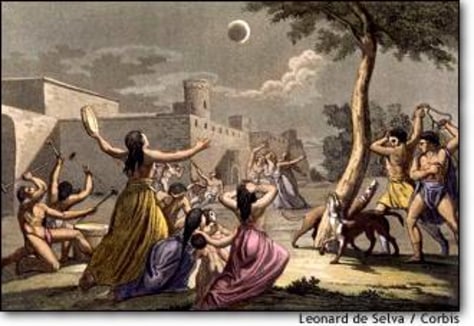
Despite his confusion about the size of the earth, Columbus was a decent navigator, he did make contact with another culture, and he did find gold. If you think any of that was easy, read this story about how he was stranded on Jamaica for a year. A few of his men found their way back to Haiti(then called Hispaniola) in what was essentially a canoe. This was also the time he lied to the natives about controlling the sun when he knew of an eclipse that was coming. He did it to gain favors from them. Anyone who tells that story without also telling of how he did it when he was cut off from anything resembling his civilization, is essentially lying by omission.

The above link also mentions Bobadilla. This was another reason I picked up the book. I had heard of a letter that had recently been uncovered listing many crimes of Columbus. You may have heard of it. As I read the book, I kept expecting to hear about these crimes, but they weren’t listed, at least not coming from Columbus. Columbus writes about events going on across the island that were out of his control and that he did not condone. Maybe he could have done more to prevent them.

Instead of entries about thoughtless treatment, I read of how he had to leave some men behind on his first voyage and gave them strict instructions to stick to themselves and not bother the natives. Now, he also took natives with him against their will, so he was no saint. When he returned he found the men he had left behind had fought with the natives, and they (Columbus’ men) had been killed. Getting their killers to describe what had happened of course would have been a challenge.

The history of the rest of what happened during Columbus’ life is, shall we say, muddled. He was told by Spain not to take slaves, but he did anyway, even sending some of them back to Spain. There seemed to be no penalty for this. Even at the time, Ferdinand and Isabella couldn’t figure out what was going on and had to send investigators. The second voyage was definitely a military mission and included priests and farmers who established colonies. Those priests complained that in some of those colonies the slaves were mistreated. To me today, “mistreated slave” is kind of an oxymoron. You’ve already taken someone away from their culture and made them work for free. How is that okay, but there is still a further line that crosses into “cruelty”?

It is hard to tell from the few records we have, but the theme of the book I read was that many of the people who were brought to colonize this new world expected gold to be flowing out of the hills and slaves to bring it to them. When they found out they had to work, and that the “New World” had new diseases, they blamed Columbus for mismanagement. This is when Bobadilla enters the story and puts Columbus in chains.

When the story is told as if everything in Bobadilla’s letter is true, it sounds strange that Columbus was released and allowed to return, although he was stripped of his governorship. It makes more sense when you read accounts of the monarchs who found it strange that Columbus arrived at court in manacles. This was perhaps a shrewd political move by Columbus because the Captain of the ship that took him home offered to remove them. But Columbus wanted his patrons to see how Bobadilla had treated him. I lean more toward the theory that Bobadilla wanted to rule the territory without having had to do all the work of discovering it.

I can hardly summarize a book in six paragraphs and everything I’ve said comes with a disclaimer that the history is incomplete. My intention here is to supply a little more background than a painting from 500 years ago or a scrap of evidence with no context. How we treated the people we called “Indians” in later centuries; cutting their hair, making their language illegal, killing off the buffalo, all of that is inexcusable. It was also supported by our government after we had made a constitution that spoke of freedom and human rights. It was perpetrated by Presidents that we call heroic. Anyone living in the United States today benefits from those policies, excluding of the course many of the descendants of the people who were here first. We would be better off discussing how that affects people alive today than either celebrating or denigrating a man we know little about from 500 years ago.


Sunday, February 23, 2014

Metaphorically Speaking

Alright, this is an old YouTube with not that many views, but Thinking Atheist is actually very popular, Seth Andrews came from Christian radio and produces a great show. AronRa was an early atheist activist. He came out with a great series that of videos years ago that answer many of the standard questions.

The Thinking Atheist podcast

I want to focus on the caller, who says he is an atheist and and an anthropology student. His call comes in at about 22 minutes. He insists the Bible should be read as metaphor. He gives the example of the story of David being a story of revolution and the tyranny that inevitably follows. That may be true, but if he is trying to make this point, he doesn’t support it with much else, but I think he has a point and I think atheists need to get that point.

You can listen yourself, read this summory or skip past it to where I talk about why what he says is worth considering.

Instead of supporting his claim with more information, he says something about the Bible being a metaphor for what is going on in people’s heads. He tries to blame the world’s problems on secularism. AronRa does a good job of correcting that. So he rephrases saying what the Bible is telling us is we should live our lives in a conscientous manner. AronRa agrees and adds that we don’t need to overlay that with speculation as fact or allow presuppositions that may be completely wrong to affect our policies and systems.

The caller gets a bit flustered and says something about “something else out there” which is just a non-sequitor and that he’s not supporting the McChurches. This only tells us what he isn’t. We still don’t know what this guy really believes. He says something about doing some kind of research into this, then says, “you can’t deny that it’s a powerful book.”

Seth steps in and tries to help out asking “how do you speak to that whole ‘Bible as metaphor thing?’.”

AronRa answers, “Let’s find a metaphor worth living by”, then he picks Exodus 31 as an example of something that would be very difficult to find a decent moral in and gives a couple other examples including the story of how the Milky Way galaxy was given it’s name as literally the milk from the breast of the goddess Andromeda. Reality turned out to be much more interesting than this “metaphor”.

This is one of the best respsonses I’ve heard to a caller like this. Rather than believing there is “something out there”, how about looking at what we have found out and marvel at how amazing those things are. Our natural sense of awe and wonder is enough to inspire us. However, I also think it is worth understanding what the caller was trying to say.

I don’t think the caller had in mind a battle of who could find good or bad Bible passages. By this time, the caller is gone. I’m not sure who hung up on whom. Although it’s not clear what the caller had in mind, it’s doubtful that he would have come up with some amazing metaphors that could have altered AronRa’s or Seth’s thinking.

I felt for the guy, because I’ve been there.

I thought I had found these great metaphors and that I would find more. There are a lot of modern theologians who claim they have. What I had found, after reading and listening to these theologians, is a few decent stories that were not all that special compared to others and some stories that taught people lessons that needed to be taught at that time in history.

The Bible also has what the caller mentioned, but I wouldn’t call it metaphor. I would call it history written by ancient historians. History was not written then like it is written today. It was expected that you would make it a story and put words in people’s mouths. The story of David is that type of history.

I would have liked to help this guy out by giving him some more examples. I found these examples helpful when I was considering being a lay speaker and I still like them for defending the value of the Bible and defending it against fundamentalism. These don’t take the Bible literally or gloss over it’s horrible parts. Neither do they transform the Bible into some kind of modern book of enlightening stories that can guide us to a better tomorrow.

I also think AronRa, Matt Dillahunty and others need to acknowledge this other way of looking at the Bible. It is not Christianity 2.0 or a way to save Christianity. It does not require belief or dogma, in fact those get in the way. It is just as strong and sometimes a stronger argument against fundamentalism than pointing out discrepancies in the Bible or passages about slavery.

I’m not suggesting that they become scholars of modern theology only that they acknowledge that it is there. Give them the ground that there is a better way to read the Bible than 13th century Catholicism, then invite them to give an example. Most likely, they will either reference some author or speaker without being able to describe them or their example will be something lame like the one given here about King David. I think exposing this is better than returning to the argument of the problems with the Bible. Not exposing them leaves listeners wondering if there is something to this modern theology.

Questions like these will continue to come up and atheists should be aware that this modern theology may be an improvement over fundamentalists who want to ignore the poor and exploit women. This will help build partnerships against that form of religion. It also helps to be aware that in the end, it’s still theology. It still works back to requiring a level of open mindedness that makes your brains fall out. It's still the circular reference that we should love God or live like Jesus because they are God/Jesus and they're good and we should want to be like them and they'll give us love so then we'll be good and that will show others He is good and they'll join us in following God.

Here are a few examples:

There’s the story of Lazarus being shown a thirsty man in hell while his servant is in heaven. The gospel of Luke 16:19 presents this as a parable, a metaphor. So we can take away the literal meaning that you’ll go to hell if you don’t accept the laws of Moses, but what is the lesson? It has something to say about living a good life and how usually the rich and powerful get their comeuppance in the end. It doesn’t mention that it can take generations for power structures to crumble. It’s a message of hope for a slave in Palestenian Rome.

An oft mentioned passage is “an eye for an eye”. That seems pretty brutal and a rather barbaric justice system, but at the time, something as bad as having your eye put out might be returned with killing the offender and perhaps other members of their family. So it is defended as an improvement. But we’ve continued to improve since and although not perfect, our justice system is no longer this primitive, so it’s really not much of a defense at all.

The Parable of the Talents is well known by liberal preachers as one that has this difficult bit at the end where the slave who hid his talent is thrown into the outer darkness by his master. It can be found at Matthew 25:14. The slaves who are praised by the master are the ones who use their talents to do business and collect interest and make more talents (talents are money, FYI). So this gets used as Jesus praising capitalism, despite capitalism not existing for another 1,500 years.

For anti-theists, this parable is used as an example of Jesus advocating throwing people into the outer darkness because they don’t use what God gave them. There are a few, inlcuding myself, who believe this is a warning from Jesus of how they will be treated by their Roman masters if they don’t play by the rules. Again, a parable the Jews in Palestinian Rome in the 1st century can relate to, but not us.

I hate to admit it, but I actually preached to the story of Abraham going to sacrifice his son in Genesis 22. I did what many do and turned it into a story of commitment. I talked of being committed to my family and community, more conservative preachers might talk of being committed to God. It’s a horrible metaphor, and most likely nothing to do with the author’s intentions. More likely, it is a story that is telling people to stop doing human sacrifice, that God no longer wants that, but He’ll take a lamb. And of course, God is still in charge and don’t you forget it. Great story.

In the history category, much is made of the genocides and the commands from God to go attack other nations. These are especially strange since archeaology has not provided any evidence of these wars actually happening. Not only are they not trying to hide their warring ways, they are making up stories of conquest to show they are good fighters and killers. The only “metaphor” I know of is that they were a small nation, one that had probably overthrown their own corrupt government and they wanted a mythology that showed they should be players on the stage of the Ancient Near East.

There’s a speech out there somewhere on YouTube by a psychologist talking about the Noah story. He points something out that I’ve never heard anyone else point out. The story of Noah immediately follows the story of Cain slaying Abel and God letting him go unpunished. It could be this is a way of saying that if we tolerate intolerable acts the meaning of tolerance will be lost and society will fall apart. That God deals with it by killing everyone doesn’t say much for God.

Then there’s the big one. Christ dying for our sins. One preacher, who eventually got me to join his church, gave a sermon on Easter that turned that bloody story into one of love. When the guards came for him, he told his disciples to put away their swords. He preached that you should love your neighbors and love your enemies and when his time came to live by those words or to fight, he walked the walk. Looked at this way, it’s probably why the story has survived for 2,000 years. It of course ignores some of the other things Jesus said and more importantly what Christianity became in the 4th century and the book of Revelations and a bunch of other stuff, but it’s a great metaphor.

Speaking of Jesus, why do they sing “O Come, O Come Emmanuel” at Christmas? It’s because of a metaphor, or more accurately a prophecy. The metaphor was of a son being born of one nation that would be sacrificed or given to another as a way to bring peace. It’s in the Old Testament. It was a prophecy that didn’t come true at the time it was given. Later people looked at it and said it must apply to Jesus. Jesus is the fulfillment of that prophecy.

Brian McClaren, in a well known book about bringing Christianity into the modern world speaks to the passage, “there will always be the poor”, Matthew 26:11, spoken by Jesus himself. It is used and abused by conservatives to claim that Jesus meant there is nothing that can be done to fix that problem. Taken literally it seems like he is saying that. But McClaren points out that he is referring to an earlier passage in the Old Testament that says there will always be poor, AND WE SHOULD HELP THEM, Deuteronomy 15:11. Kinda changes the meaning. Jesus knew his scripture. Or at least the authors of the gospels knew them. Today’s readers don’t.

That one really isn’t a metaphor, it’s just a statement about a value, some advice about how to live and act with justice. It’s a better interpretation of the Bible than the brute capitalist who is just looking for some words from Jesus to justify his actions, but if the only reason you want to help the poor is because Jesus says to, then maybe you need some other sort of ethical education. Jesus did not invent these ideas for living together. He lived in a brutal time and to people born into slavery and treated like dirt, his ideas no doubt seemed radical. For anyone who has access to clean water and fast food, it shouldn’t seem radical at all.

I could keep going, but hopefully I’ve made my point. I wish callers like this would actually tell us what their modern theology is instead of referring to others and making wild claims about new and improved Christianity. Any time I’ve tracked these down, they may be kinder and gentler stories, but they don’t offer anything that couldn’t be taught in other ways. They don’t need to be superimposed with supernatural actions. It’s not even necessary to claim that their characters are somehow better than any other characters in stories with morals. We have lots of great stories, let's use all of them.

Wednesday, June 26, 2013

Truth Remains


Truth is much more comforting than any god. Truth does not change based on my feelings. If I am angry at it or if I abandon truth, it waits there, unchanging.

Why do you think they want you to worship once a week? If you don’t, you’ll notice things don’t get any worse or any better. They’ll tell you god is angry or upset. If you stay away long enough, they will change god or make a new god in an attempt to get you back.

After a while god vanishes and only truth remains. 


Thursday, January 17, 2013

Theological malpractice


I was in an online, ummm, discussion, about whether or not Jesus actually existed. Such discussions require a certain amount of googling. In my travels I stumbled on an iTunes course titled, “The Historical  Jesus”. It turned out to be pretty good. You can hear the student’s voices asking questions. There was at least one Middle Eastern woman and an older guy, possibly from Texas, plus a few more. I would have loved to go out for a beer after that class.

The teacher has been around for a while. He talks of knowing about the new archaeological and textual evidence back in the 1960’s. Much of that went underground somewhere in the decades to follow. Some of it resurfaced with “The Jesus Seminar”, but much of it is still ignored. I only listened to the lectures, but here is the reading list, including the professors own work, free online.

New American Bible: St. Joseph New Testament Study Edition [ISBN 0899423116]
Thomas Sheehan, The First Coming: How the Kingdom of God Became Christianity
Paula Fredriksen From Jesus to Christ, 2nd edition, Yale-Nota-Bene [9-780300 08457]
Bernard Scott, Re-imagine the World Polebridge [0944344 86 0]
Robert J. Miller, The Apocalyptic Jesus: A Debate, Polebridge [0944344 89 5]
Dominic Crossan Who Killed Jesus? HarperSanFrancisco [0-06-06141803]
Stephen J. Patterson, Rethinking the Death and Life of Jesus [0-8006-3674-0]

By the way, Thomas Sheehan, the professor, is Catholic born, raised and still attending. He would often repeat that he doesn’t intend to challenge anyone’s faith, or change anyone’s mind on that topic. He does note that if you approach Jesus as he does, through his course, you may find yourself challenged, but that is not his intention. He would occasionally let his views on religion be known, they were more about people working together to find community for themselves, within God’s creation, but not as a way to win favor or avoid punishment. He would also argue that this was the message that Jesus, who he calls Yeshua, his Aramaic name, actually taught.

If you have some different ideas about what Jesus/Yeshua taught, you should take that up with Mr. Sheehan. He can explain where the theology that you espouse originated. Much of it came well after the death of Yeshua. He would argue that Yeshua did not see himself as the vessel of the message, or as divine. But I don’t want to get into those details. They interested me once, but no longer hold me for more than a few minutes.

What his course builds up to is the moments when the preaching of Yeshua was scrambled and turned into something more like history. Today the people who try to treat the Bible like history are called fundamentalists. At the time, they were people who had a message of their own, a political message, and were using the oral history of Yeshua to tell their story. They mixed the parables with the liturgy and said that these things; the virgin birth, the resurrection, actually did happen.

This does not trouble him. He understands that it was how it was done back in the latter days of the Roman Empire. What troubles him is that we have spent a few hundred years unraveling this, we have been lucky to recover ancient papyrus at Nag Hamadi, we have people who dedicate their lives to learning languages that are no longer spoken, and yet, we still have preachers telling the stories as if they are St. Augustine.

I have a study Bible that clearly states that the last chapter of the book of Mark was tacked on by later editors. They had to do it to harmonize it with the other gospels. Mark leaves you with an empty tomb and suggests you go back to your homes and live a holy life like Jesus. That is how you will bring the Kingdom. It makes for terrible liturgy on Easter Sunday. By the way, this is the New International Version, not some agnostic’s guidebook to Christianity. These are facts only disputed by those who refuse to look at the evidence.

For Sheehan, much of the evidence is “source” analysis; what were the authors of the gospels looking at, what were they reading and hearing. He also uses “literary” analysis; what type of writing were they doing and what message did they intend to communicate. So he looks at the book of John that has Thomas being an unbeliever. Now that we have recovered the gospel of Thomas, one that didn’t make into the canon, we can see how different it is, and guess that the author of John was giving a snub to the community of Thomas. Sheehan relies on the “textual” analysis from the people who translate the words, assemble the fragments and comment on the authenticity of the source documents.

This analysis does not end with the writing of the original documents. As he traces the formation of the early church, he shows how the Easter story, as presented in John, is “read back into” Matthew and Luke, then that reading is gathered together and read back into Mark. This proved difficult and thus the adding of the extra chapter. All of that is in turn read into the few comments about resurrection found in Paul’s letters. When St. Jerome translates the Greek into Latin he takes subtler meanings of words about waking up from sleep or being lifted up and uses the Latin for “resurrection”. From then on, we have a fabricated historical account of what happened in those three days after Yeshua died.


Sheehan steps out of his professor role at this point, about the middle of the 9th class, and says, this is, “…the stupidity, frankly, of it all.” And he notes, it has given “the village atheist” all the ammunition they need to say it is stupid. He continues,
“And the fact that it is performed by people with doctorates and people who have the authority to preach from pulpits, doesn’t make it any less ignorant. If you went to a doctor and she didn’t know about the latest treatments for cancer, you’d probably find another doctor. And if she treated you with information about cancer from 10 years ago, you would sue her for malpractice. But preachers get a pass. Even though they are dealing with issues that concern the existential commitment of people’s lives, ‘does my life have meaning, will I end up in hell if I do this, that or the other’, even though they advise on those based upon their alleged knowledge of scripture. They get away with it.”


And the people in the pews let them.

If you’re interested, the course is in iTunesU. It is from Stanford University, 2007, given by Thomas Sheehan. That should be enough to find it if you have iTunes. Or try this link.


Thursday, May 3, 2012

We need everybody in on this


Another interesting talk at the Madison Freethought Festival 2012 was by Sean Faircloth. He is currently working with The Richard DawkinsFoundation for Reason and Science. Not surprisingly, he talked about science and said we should know our scientific heroes. He showed a slide of Francis Bacon, sometimes credited with sparking the rise of science in Europe. I talked to him about also including a Muslim scientist, for reasons I will explain in my follow-up email to him, included below.

In one of the museums I visited in my recent trip to Ireland, there was a timeline of our advances in science, going back to our use of fire or some such primitive beginning. What was unusual about this timeline is that it included Ibn Al-Rushd. Most timelines include Aristotle and other Greeks then leave a big gap. They might say something about their works being lost in the East for a while. The next thing that happens is Western Europe conquers Moorish Spain and the Greek works are suddenly found! Although unconfirmed, those works may have been lost for up to a century, and certainly the direct line of their teachings and even language was lost, but they were not just put in cold storage in Baghdad.

My letter to Sean:

I’m following up on our brief conversation about the heroes of early science that we had after your talk at the Madison WI Freethought Festival. You mentioned Francis Bacon and I suggested you also include a Muslim. This is not just a token nod to Islam but an important part of the history of how Europeans dealt with the scientific revolution in its early stages. Our ignorance of this history is directly related to the misunderstandings we are experiencing in the science vs. religion debate today.

If I had to pick one Islamic scientist to represent the rest, it would be Ibn Al-Haytham who wrote the Book of Optics in 1039 CE. This book is considered by many to be the first work to involve modern scientific methods like peer review, laboratory experimentation and documentation. Also important is the climate in which it came about. Al-Haytham is quoted as saying, "Truth is sought for its own sake. And those who are engaged upon the quest for anything for its own sake are not interested in other things. Finding the truth is difficult, and the road to it is rough” in his critique of Ptolemy, demonstrating the new idea of doubting the ancient texts handed down to them from the Greeks.

The culture that encouraged this line of thinking included “The House of Wisdom” started by the Caliph al-Hakim. Reading was encouraged by anyone from any race or stature and books were collected from all over the known world. There were religious reasons and motivations for this, but there were few religious restrictions on what could be explored. Much of the knowledge that was accumulated was passed on to the European scientists that we all know. Here is a quick list of some of that

This came to an end in the mid 13th century when the Mongols invaded from the East, destroying much of the works in Baghdad, and the Europeans took back Spain. Muslim Spain (Al-Andalus) was already declining from within so exactly who destroyed information and how much of it was transferred to Europeans is not entirely clear to me. There is evidence that a very different attitude was taking hold and there was some fear of all this knowledge flooding in as indicated by the prohibition of philosophical and theological theses in the Condemnation of 1277 by the Bishop of Paris.


Although the ideas of copyrighting and citing sources were not yet known, it is not hard to imagine that hiding a connection of knowledge to an empire that had just been conquered was deliberate. Especially by an empire that had control of the education system and was under threat by internal and external forces. It was also just bad luck that Arabic was difficult to use in a printing press. Even if it was not deliberate, the result has been that it is the Renaissance in the West that has been credited with the rise of science when in truth it was a combined effort of the cultures of the three major monotheisms with significant input from the Far East.

Support from government, open minded attitudes, encouragement of learning for everyone and a spirit of cooperation started the scientific revolution. War, power struggles, hoarding of information and claims of cultural superiority have worked against it. These forces continue to be at odds today. Hopefully we can learn from the past.

Thanks for your time and work.

P.S. I’m still searching for good scholarly documentation of the above. There are plenty of web links but the books I have found tend to have religious agendas. There is no thesis here that God or Allah encouraged science, only that cultures who worshipped those gods can also be cultures that encourage science. This BBC documentary, by physicist Jim Al-Khalili does the best job of connecting the dots that I have found.