Showing posts with label leadership. Show all posts

Tuesday, March 24, 2020

Corona Blog

So, I’m a blogger, so I guess I should do this. It’s about change, about lots of changes through history and what that means to us now. I might seem a bit annoyed. If you want to get a teenager to read this, preferably one who doesn’t want to, they might get the proper tone of voice for it.

Everybody is talking about change. Of course we will change. Hasn’t every President run on that platform for the last 50 years? Make America Whatever or Hopey Changey, I don’t care. Throw the bums out. That’s a desire for change. But there is always tension, against the fear. Too much rapid change to greater rights for more people and a move toward socialism resulted in populism, on the left and the right. I have watched the constant battle between the dawning of the Age of Aquarius and the good old traditions since I was born in 1960. Look at what’s happened in the last 100 years since the 1918 flu pandemic. That’s in your parents’ or grandparents’ lifetime if you are older, so hopefully you talked to them. If you are younger, hopefully you know someone in the next generation up. They might have an old recording or at least some pictures.

They went through:
Nuclear weapons
Invention of vaccines
1918 flu
World War I (1914 to 1918)

Despite the pace of change having increased in the recent centuries, we haven’t developed new ways to cope with it. I don’t have much to suggest for that, but for me, getting some perspective on how much has happened, how far we have come in a short time, and how it has always been the people pushing leaders to change. That has helped me understand it.

My Public Education history spent too much on the days before the Revolution in this country, that’s my opinion. I always wanted to get to the World Wars and why those happened.

It was a major change in how the world worked. Before then, we were a world of royal families. Generals road on horses with colorful uniforms and battles lasted for a few days. With the arms buildup of the late 19th century, a result of the industrial revolution, these in-bred idiots who had no idea how to live in a time of electronic communication and world travel, put a match to the powder keg they built. To defend against heavy artillery, they created trench warfare, to breakthrough that they invented tanks, and on and on.

If you don’t want to have a love for history, don’t click here. Dan Carlin has a great ability to tell the story and provide the facts. His “Blueprint for Armaggedon” series is the story of WWI. 

Going back through the 19th century further you had:
The Industrial Revolution, steam engines, mechanics, oil. Horses were no longer the best source of power, but we still use the term “horsepower”.
Darwin published the Origin of Species in 1859.
Michael Faraday, who died in 1867, advanced our understanding of electromagnetism. That’s kind of important to whatever device you are reading this on.

Pause for a moment on this guy. He discovered the mysterious energy floating around that we could use to move things and to communicate across miles. Click to see David Tong giving a lecture in the same hall where Faraday gave his. Tong is talking about the newly understood forces of quantum physics, that we now understand are the fundamental forces behind all things. He’s giving that lecture in the same hall, with the same desk, that Faraday did. It’s like we just figured out stone tools yesterday, and now we all have scalpels in our medicine cabinets. 

While Faraday was alive, we were finally throwing off the last myths about race and changing laws so we could no longer justify slavery. There are still slaves in the world, I know, but most people know that’s wrong now. What will be commonly thought of as wrong by end of your lifetime?

Change takes a little longer in the centuries before that, but let me connect just a few more things. Once the empires that grew out of ancient history started bumping into each other and “discovering” each other, we started accumulating our knowledge, sharing it actually, but not always in a nice way. You might have heard of Thomas Aquinas, who tried to reconcile the Catholic religion with Greek philosophy. He had a little help from the Muslims by the way. Not too long after that, we had Protestant kingdoms, so there was a lot of fighting with the Catholics.

At the end of all that fighting, after the Thirty Years War, 1648, a treaty was signed called the Peace at Westphalia. It took away powers from the Pope and created a new type of nation. That’s what you live in, a Westphalian nation-state. Sure, your way of life is rooted in a Judeo-Christian/Western Civilization/Constitutional Republic/Democracy/melting pot, sure. But the basic structure of our politics has only been around for 400 years, and it was formed under duress, and it’s not working. A bunch of morons from the Middle Ages made it up to get the Pope out their business and we can get the billionaires out of our pockets if we create the next system.

Something else happened once the European Princes and Bishops quit making us kill each other. It was the British Royal Society, founded in 1660 to promote scientific thought and learning. It was the fertile ground where Isaac Newton flourished. Newton created the mathematics that got us to the moon (along with some of those other folks above). Computers were first put to the test during that work. That pretty much brings us up to where we are now.

To have that sort of creative energy, to allow the brilliant people of the day to discover something, you have to first have some degree of peace. You have to have a little extra left over at the end of the day to give to the general welfare, to build some roads, to have some nurses ready to take care of us instead of working overtime to pay off student loans and a mortgage from that house they bought before the bankers destroyed the economy.

What gets left out of historical discussions like this is none of it happens if we don’t care about people that we will never meet; people on the other side of the world and people who are not born yet. If we aren’t keeping the world clean and free from violence and filled with beauty, if we aren’t nurturing the people who grow our food, or who are sitting in a room somewhere coming up with formulas that who knows what they will do, but we can bet they will do something, then none of this happens. Then we slip back into using those stone tools to harm each other and take whatever we can just because we can. None of this happens if we don’t realize we need each other.


A note on the present: We aren’t purposely crashing the economy by shutting it down, just so we can save a few million lives. The economy would have crashed if we didn’t do anything because the hospitals would have been overrun. People would have chosen to quit interacting with others after it was far too late. Services would be much more disrupted because the closures would be random; we wouldn’t be choosing to keep groceries open as opposed to restaurants, we would be choosing from far fewer options.

It would not be some simple math of 2 or 3% more people dead. We would be surrounded by sick people and no one would want to touch them for fear of getting sick themselves. This would multiply the problems. Any normal illness or regular medical attention needed would be almost impossible. We would have new priorities, like disposing of the bodies.

The stock market selloff was recognition by those who understand how their system works, that it is not working, that it is not designed to respond to a problem like this. It is not designed to take care of the people that actually create the wealth that they accumulated. Ironically, it created the problem by changing the environment, putting workers under stress, and prioritizing profits over health. It put messaging over science. They know this, they saw it coming. They didn’t tell us until they cashed out. But cashing out is a strategy of the dying system. I don’t know what the next system will be, but it won’t be the current leaders who create it.

Sunday, May 12, 2019

Atheism for Religious and/or Spiritual 9

Previous                            First                     

Before I go on, I promised back in the 2nd of this series that I’d talk about the problems of the early Catholic Church. I hope I have spent enough time discussing the Enlightenment era and the flaws in Western philosophy in general. But there are good reasons why I still choose them over Christianity. There are a few things that started gnawing at me about Christianity and the more I looked into them, the more I realized they were foundational problems that could not be solved. That is, they weren’t just cracks in the foundation of Christianity; they were demonstrations that there is no foundation.

The first is the consensus on the existence of Jesus. That’s it really. That is, the entire extent of the scholarly consensus on Jesus is that he existed, and maybe that he was crucified. The dates of his life are disputed, his name is in dispute, everything he said is debatable, let alone what he meant, his family life, if he was a spirit or a man who was inhabited by spirit or if he was born God. All of these questions are played out in the scriptures and some of them have led to wars and schisms (John 14). Holy wars are not cool as they used to be. Claims about what someone did in the past are expected to come with data that can be confirmed and facts that are agreed upon by a number of experts. Part of the statement of the consensus on Jesus is that we can’t recreate any of these details from the documents we have, not the four gospels or with the help of the apocryphal documents.

They spent centuries trying to work back to some original theme and what they discovered was there isn’t one. Instead, we get Peter arguing with Paul (Acts 10), Thomas painted as an unbeliever who repents (John 20), and a fourth gospel that is out of sync with the other three. This was expected and normal at the time the scriptures were written. Authors added to and reworked the stories to bring their new insights to them. But now we have modern history which is expected to be accurate and to let us know when something is uncertain. This leads to a confusing mixing of these two different genres. A historical fact like “Jesus existed” is used to claim that everything written using the name “Jesus” is also historically true. It may be true that Jesus died at the hands of the Romans but that says nothing about how that death washed away sins or the details of how he rose or who found him or who saw him later. The truth of one historical fact has very little effect on the truth of most of what is found in the New Testament.

This leads to the second thing, the order of the New Testament. If that collection of books was simply reordered to the order in which they were written, I think we would all have a very different view of the meaning they are attempting to convey. The first book in the New Testament, Matthew, begins with a birth narrative, connecting Jesus back to King David. That makes sense if you are attempting to tell a story that you think is real. But many believe the story of the virgin birth was concocted later to sell people of that time on the idea of Jesus being God. Gods of that time were born of virgins, so Jesus should be too, so you need a story.

If you want to follow how the stories began and were copied and embellished, start with the Book of Mark. It was written first. It has no birth story. It doesn’t have a resurrection story either. Maybe I should say it didn’t have a resurrection story. Many Bibles have footnotes telling you that the last verses of Mark were added on later, to harmonize it with the other gospels. Matthew and then Luke were written after Mark, sometimes copying, sometimes changing stories slightly, sometimes adding a new story. The gospel of John was written decades later.

To further correct the chronological order, all of the works of Paul need to be shuffled to the beginning. All of them were written and its author died before the first gospel was even heard of. Acts talks about Paul, but it was most likely written by the same author as the Book of Luke. Making sense of the different stories and contradictions is hard enough, but if you were to be presented first with a story of a man who only met Jesus in a vision and mentioned virtually nothing of a family or any earthly travels, it would be disconcerting indeed to then find out about Kings hearing of a virgin birth, to read of encounters with priests, of a man having meals, and telling parables. Was Paul unaware of all of this? For me, it’s led me to consider that this is a legend that developed, not a history that was poorly documented.

This project of ordering the books chronologically is complicated by the difficulty of assigning dates to the writings. That is an inexact science, and the authors sometimes attempted to mask who they were and when they were writing. The complete reordering might begin with the “undisputed Paulines”, Romans, 1 and 2 Corinthians, Galatians, Philippians, 1 Thessalonians, and Philemon. These would be followed by Mark, Matthew, Luke/Acts then John. The job would get more difficult after that as we would need to sort out the psuedepigrpaha (like 2 Thessalonians), the works that were falsely attributed to Paul or other figures of the time. These were either assigned authorship in error by people who didn’t know any better, or deliberately claimed to be an author other than the actual one as a way to legitimize the message.

This is not just a New Testament problem either. Deuteronomy is the fifth book in the Old Testament, but is now known to have been written much later. Maybe most significant is the story of Eve tempting Adam with the apple. Besides simple facts like no apple appearing in the Bible, the story itself might not be a creation story. It may have been written earlier but it was given its place in the Bible by the people who assembled it, not some original author attempting to write a coherent narrative. It’s a folk tale, probably not intended to be an account of the first man and woman. So the entire reason for Jesus, to save us from the sin that got us kicked out of the Garden of Eden, is a mistake of some scholars in the centuries around the Fall of Rome who received a text and did not question its authorship or authenticity. They were told Moses wrote it and that was good enough for them.

With all of these competing narratives and a lack of scholarship, we arrive in 381 AD at the third thing. In that year, soon after Theodosius became emperor of Rome, he declared that he knew the correct version of all of this. Rather than honor other ancient traditions and allow for freedom of expression of a plurality of religions, it was time to get everyone under one system. To do that would require enforcement of these Catholic ideas using his military power and in many cases, the burning of anything and anyone who didn’t agree. This included not just pagan or Jewish places of worship, but Christian churches that didn’t preach the correct doctrine.

The page Theodosius gets at Catholic.com calls him a “just and mighty emperor” and puts it this way,

“In January, 381, the prefect had orders to close all Arian chapels in the city and to expel those who served them. The same severe measures were ordered throughout Theodosius’s dominion, not only against Arians, but also in the case of Manichaeans and all other heretics.”

It tries to soften exactly what these “severe measures” were but that’s why you shouldn’t get history from only one source, and especially from a source that is biased. By the way, “Arians” here have nothing to do with Nazis. The big problem with them was they were not Trinitarians. They said Jesus was subordinate to God, not part of him. My problem is no one can explain what the Trinity is. Instead of discussing it that though, Theodosius just said he was bored with all the talk and started killing people.

This wasn’t just an establishment of a strong military rule or just a wedding of religion with government it was a closing of minds that had been developing philosophies of democracy and science for centuries. In his book, Confessions, from around 397 AD Augustine wrote, “There is another form of temptation, even more fraught with danger. This is the disease of curiosity. It is this which drives us to try and discover the secrets of nature, those secrets which are beyond our understanding, which can avail us nothing and which man should not wish to learn.” Granted I’m taking this out of context in this short piece. He was confessing his thoughts as a young man and how they led him away from a more pious life. However, from archaeology we can see that technology stopped advancing around this time and we see less works of literature over the next few hundred years. I’m not blaming the Fall of Rome on Christians, but they didn’t prevent it and didn’t even seem troubled by it.

You should check all of my facts here and draw your own conclusions. Nothing I said here necessarily cancels out everything the Church has ever done. It shouldn’t change your relationship to your favorite parable or the community you consider your spiritual home. For me, it led to questions and it was the reaction to those questions from church leaders that eventually led to my lack of a belief in the divinity of Jesus and ultimately anything supernatural.

Monday, March 12, 2018

Trust is earned

History of the last 100 years. Who are the baby boomers?

1918 – WWI. A horrific experience following a massive build of arms due to the industrialization of the world. It brought family monarchies and isolated tribes all into one giant playing field. They now saw how small actions on one side of the world affected others  far away. And the President was a racist.

1928 – Things were looking pretty good. People were partying. A technological boom was occurring. If you don’t know why 1929 was famous, look it up.

1938 – Hitler and Mussolini are in power. People saw it coming but did little.

1948 – Hitler was defeated. Soldiers had to find their own way home, many died in that journey. Parts of Europe were flattened. The Mideast was carved up by the 3 superpowers. China was having a civil war that would end with Mao. Baby boomers were just being born, not yet affecting anything except causing people to buy washing machines and convenience foods. 

1958 – Starvation was rampant throughout Central America, India and Africa but technological solutions were solving many of the problems. America invested in its veterans, had brought electricity to rural areas, grew its suburbs, but argued about what to do about communism. Baby Boomer children were shown images of their cities being obliterated by nuclear explosions.

1968 – Moon landing, Robert Kennedy shot, MLK shot, riots in major cities, corruption exposed in politics. The baby boomers were starting to get a voice since the universities were well funded and well attended. They supported civil rights, they protested war, they wanted workers to be treated fairly, unions were strengthened.

1978 – After being shot at and arrested, the baby boomers retreated and tried more traditional ways of influencing policies. Meanwhile evangelicals in America and other traditions were also discovering political power. Some baby boomers had helped end the Vietnam war, so now they were divided:Veterans who thought they should have bombed more and those who had avoided the draft or who were talking about how they were given orders to fight an unjust war. The superpower’s dominance was also in retreat.  Secret operations were getting exposed, colonies were getting independence, or they were fighting back in low level wars.

1988 – Reagan (not a baby boomer) is fighting new secret wars while also turning us from the largest loaner nation to the largest debtor nation mostly through the buildup of nuclear weapons. Many Baby Boomers return to protesting, along with a new younger generation. Starvation is seen as a world problem, but some of the solutions are just causing more problems. All over the world leaders point to other nations as the cause of problems, old tribal differences turn into modern wars in Bosnia, Afghanistan, Pakistan, Central America and elsewhere.

1998 – The first baby boomer President reduces the deficit, wants abortion to be “safe and legal”, tried to reform health care and started SCHIP, signed a gun control bill, loosened restrictions on gays in the military. He also signed the Defense of Marriage Act and reduced the number of legal immigrants allowed into the country. He also used cruise missiles in the Mid-East in his fight against terrorism. He modernizes the military, but spending is still high.

2008 – This year saw the near collapse of the world’s financial system as a Republican President and divided Congress had weakened banking regulations. Bankers had abused their lending power and gambled with one of the foundations of the system, home ownership by private citizens. Youth again took a leadership position in protesting these massive organizations and the people who once marched with MLK and against Vietnam are now in positions of power to help them. Another baby boomer President comes to power this year and again has to right the economy, reduce the deficit and bring the long awaited and desperately needed reforms to health care.

2018 –  Millenials now equal to Baby Boomers as a share of the electorate.

Perhaps one of the biggest mistakes of the 1960’s was when young people said “don’t trust anyone over 30”. I was still too young to even know what they meant, but it took me a long time to understand the contribution of the generations before me. The ones who fought fascism and built the schools that I attended. We can’t afford that long learning curve this time. Boomers have the traditionally strong voting block of older people and we might be seeing a long needed increase in the youth vote. Let’s work together.

Thursday, September 28, 2017

How many partners do you need?

When I ask people what we should do when we disagree, most people say we should go find people who do agree with us and work with them. At best they might make some sort nod to inclusivity. This worked fine for most of human history, but then we found out that what we do affects people on the other side of the planet. What we wear and what we eat can cause suffering for children on other continents. What we don’t do can result in death and disease just down the road from us. Even if we want to be selfish, ignoring that suffering will eventually result in problems for us and our loved ones.

There are answers to the question. We have rules of order for running meetings. We have neighborhood groups and community organizations. We have Constitutions and International Law. We have the Rule of Christ if you prefer, Matthew 18:15-20. But very few people know how these systems work and even fewer actually use them or use them wisely. All of them are designed to regulate common decency; take turns speaking, respond to what was said before starting a new topic, when consensus doesn’t exist take a vote, seek facts, agree on how to determine truth then stick to that agreement. Drawing a boundary and keeping some people outside of it is the last resort.

I left the 3rd largest denomination of Christians because they couldn’t agree on how to deal with the issue of homosexuality. The United States moved on and I realized my church was no longer a leader on one of the most important issues of our time. But I didn’t blame all Christians. I blamed half of the people in my church and I blamed the poor system of decision making they all inherited. But I still acknowledge and support those who are fighting that fight from the inside of what I consider a flawed organization.

That’s around 6 million people I consider allies, not enemies. I’m sure I have many differences with many of them. But they have a voice that gets heard in tiny villages all across Africa where they still have the death penalty for loving someone in the wrong way. They have ways and means of building community that I don’t. My facebook post congratulating my friend and his husband doesn’t have that kind of impact.

I just picked this one issue. If you think this post is about advocating for LGBTQ or whatever initials I forgot, you missed the point. Pick your issue; GMOs, Afghanistan, vaccines, big government, big organic, sending food to Kenya, choice, life, free speech, then think about who you can’t talk to because you disagree on those issues. Then pick an issue like breathable air or drinkable water or creating communities where children can grow and discover their place in the world. How many partners do you need to make that happen?


Sunday, December 4, 2016

I love the Internet, it does not love me back

Paul Young, author of "The Shack" recently gave an analogy of religious zealotry in an interview. He said there are people who go looking for something. Let's say you have a guitar player living in rural Indiana who can't find people who get what the blues are all about like he does. So he straps his guitar on his back and starts hitchiking toward Memphis. He passes through small towns and is given sideways glances and maybe even spit on for how he is dressed or the vision he talks of to anyone who cares to ask.

Then he gets closer and sees a sign, "Memphis, 100 miles". He sits down, so happy he almost cries, plays a tune. People ask him why he's sitting there and he says, "Because I've found it, look, Memphis, it's a sign. I was so moved by this sign. It's real, it's attainable. I'm going to plant myself here and sing songs about this sign and invite others to share in the feelings I've had about it."


The analogy of going to church on Sunday is obvious, but there is also the analogy to social networks. Many people find themselves alone in their communities, with a belief system that is not shared by the people they are in contact with everyday. They go to the internet looking for something else, and they fall in love with the internet. Their friends are named PragPop27 and scrmdidle. It can be very satisfying and also a complete waste of time.

The tools of the information age have been demonstrated to be very powerful. They helped overthrow Qaddafi and bring awareness to many struggling people around the world. They have also been used to recruit terrorists who then can't be traced back to any specific government or entity. Tools are tools, they aren't the answer.

Tuesday, August 30, 2016

Naturalization of teleological language. Say what?


I’ve been tracking Bart Campolo lately and finding him well worth a listen. In a section of this podcast, about 10 minutes long, so many things are tossed around, it could take hours to develop. It’s a rapid exchange. Bart was passionate about his desire to incorporate the many voices he hears on campus while Tripp was trying to explain the value of the language of the traditions he holds so dear. Both were pointing in the same direction, but many differences need to be worked out before they can really work together toward that same goal. Or maybe there’s a third way.

Listen to the whole thing, or jump to around 20 minutes in and try to catch up. I took their words for the next 15 minutes and made these “study” questions. Some of them get expanded on later, but mostly they are left unanswered. I hope the two of them get together for more.

Questions that depend on belief

Did the human technologies of eating together, singing together and performing rituals develop naturally, through evolution, and then get incorporated into religion, or were they developed by inspired religious leaders?

Did all of that get associated with a supernatural explanation at a time when the only explanations we had were supernatural, or do they actually have a supernatural origin? Is there another explanation?

Questions that could be separated from the belief question

Did science emerge from monotheistic assumptions then move through secularization, removing the supernatural aspects?

Since we are now developing more natural explanations, is theological language being “naturalized” to apply to our teleological relationship to creation?

How are these two sets of questions related?

How does our language hold our beliefs in place?

How do we develop the language to serve the need of bringing people together to lead happier and more productive lives?


Friday, October 16, 2015

Secrets of Proenneke Cabin

"He gestured vaguely and mentioned a few landmarks along the way, being careful not to make it too easy."

I read a version of the legend of Parceval just before heading off to Alaska this summer. My trip was not legendary, except perhaps in my own mind. The words above however, taken from that story, were with me. The scene is a young Parceval, living in the woods, unaware of Camelot. Two Knights appear and see something in the boy, but only give him enough to awaken his sense adventure.

The attitude toward hiking in Alaska is different than most places I've been. Most parks and wilderness areas will have a variety of warnings and requirements. Where I went in Alaska, there were no permits required, I didn't need to check-in anywhere, if I hadn't initiated contact, they wouldn't have known I was there. There was no signage, no trailheads, no warnings posted.

Part of this is, I'm sure, due to the sheer enormity of the space and the barriers that have to be overcome to get there. Most of the filtering out of people is done by nature. If you manage to get by the mountains, the snow and the freezing water, there are the bears. Let's hope the Alaska Department of Natural Resources isn't thinking that they want to throw you the wolves, or bears, or whatever else might be out there, but they definitely expect you to figure out more for yourself than your average walk in a park.

In Minnesota, before entering the Boundary Waters Canoe Area Wilderness, you are required to get a permit and watch a video about hanging a bear pack and "leave no trace" camping. When I hiked the Grand Canyon, there were a lot of signs up about dehydration and how it is most common that fit young men are the ones who succumb to it, because they are most likely to think they won't. There was nothing like this for the Lake Clarke Wilderness. There also weren't trails.


There is a sketchy explanation of the a few hikes around the Proenneke cabin area on the NPS website. http://www.nps.gov/lacl/planyourvisit/low-pass-route.htm The hike I originally planned involved walking along the lake shore and, as their description says, "you should be able to discern which drainage will lead to Low Pass because it's the most significant one in the vicinity...". Now, without surveying the entire area, I don't know how you would determine "most significant", worse, as far as I can tell, the directions start off sending you east, when you should go west. After that, they say, "follow the tundra ridge to the pass."

I wanted to make this a loop route, and the Low Pass description says that at some point, that will lead you to the Hope Creek route. That description refers you to the Hope Creek route description, which says that at some point, it will lead to the Low Pass route. That's as good as it gets.

I have some experience with reading topographic maps, but if a pass has a name, I don't know how you find it without that name appearing on the map. I read a few other descriptions written on wilderness guide websites, but I would expect them to be vague, since they want you to pay them for what they know. I thought I had hit pay dirt when I found someone's homemade map, a satellite photo with a big arrow on it that said "Low Pass". I matched that up to my topos and found a wide area that was at 3,000 ft, surrounded by the 5,000 or more foot peaks. This seemed to be "significant".

In case I sound like someone who was proceeding foolishly, I was, but I wouldn't have tried this without someone who had some experience along with me. Luckily I have a brother who lives in Alaska and has worked in the brush. He reviewed my plan and said it was aggressive. Actually he said, "whoa, whoa, whoa". Anyway, we changed the plan to the Hope Creek route. This one proceeds due south from the cabin, following a creek. It even starts out with some trail, but that trail quickly starts to break up.

By the way, I looked for books on hiking in Alaska. I checked guide books, there was less in them than what I found on the NPS site. On the drive to Homer, we stopped at a map shop. Nothing. I found a copy of a National Geographic map of Lake Clarke park on sale on amazon. It was $350. Apparently paper maps are a collector's item. I was hoping maybe one of the float plane operators I talked to would give me a little free info, but most of them hadn't even been there.

Crossing the mountains on the way there gave me some appreciation of what I was getting into. It's a mere 20 miles or so on the map, but looking down on the cliffs and snow covered peaks, I knew I wouldn't be walking out of there if anything went wrong. It was a little bit of a relief when we were greeted on the radio as we flew up into the Twin Lakes valley. We landed right at the cabin, which is just a few feet from the water and were greeted by a rainbow that also came right down to the water. I realized that was something special when I saw how excited the park ranger and float plane pilot were. I would have thought that was something they see every week.

After spending some time in the historic cabin and getting the obligatory picture in the doorway, we tried again to get intel on the hike from our park ranger. We got a couple more details on the Hope Creek route, but it ended with the same "then you get up on the ridges and you can follow them over to Low Pass." She literally waved her hand over the map at this point. Once again, "whoa, whoa, whoa." But that was the best we were going to get.

The actual experience was, as my brother expected, much slower than I expected. If we had known better about where we were going, we might have made it over the ridge and back down the other way. After a day and a half of hiking, we made it to a ridge, and could see where it went over into the next valley. Ridge hiking is a much easier hiking experience than the side of mountain covered with low bush cranberries and blueberries and various lichens. But there were many unknowns beyond that and no reason to challenge them.

When we got back, we met one more park ranger, and that one finally pointed right to a spot on the map and said, "that's Low Pass". It was the next valley over, much more narrow than the one I had found and another 1,000 ft higher. I could also see by looking at where the streams started, that there had to be ridges between them, and by following those high spots, it would lead you right to the ridge we had stood on above Hope Creek.

I didn't actually go there, so don't take these directions as anything close to a suggestion that you go there and follow them. I can't know what was over the high point that I saw. Just before we got to the ridge, we had a choice between a 200 ft mound of boulders and a scree slope. I choose poorly and could have easily lost a lot of progress or been injured sliding down that. Some scree is listed on maps, but most of it isn't. If a description of an Alaskan hike says "This route crosses a couple steep scree slopes", as the Low Pass description does, you should take that very seriously.

There are many things to do around the Proenneke cabin. There is a small camp site right there with metal caches to keep the bears away from your food. You can hike the shore line. There is one rustic lodge on the opposite side of Upper Twin Lake. Port Alsworth is not far away on a large lake with many lodges. Many people fly from there and visit the area for a just a couple hours. I would recommend any or all of those. Whatever you do, don't miss enjoying the incredible scenery.


Tuesday, October 6, 2015

In 1493, Columbus took everything he could see

It’s one of my favorite time’s of year again, when people talk about how Columbus ruined everything. Don’t get me wrong, I’m no big fan of the European take over of what is now called the Americas. I’m also not a fan of bad history. According to the memes that come out this time of year, Columbus invented slavery.

There is no question that the particular brand of slavery that existed from Africa to America and included the natives in the Americas was particularly horrible in human history. There is no question that Christianity supported slavery and it was in turn supported by the Old Testament. It is also unquestionable that slavery has been a part of every civilization. It’s elimination is very recent and very unique. The colonizers that began with Columbus are not unique at all.

Slavery in the Americas began thousands of years before Columbus ever got there. And I’m not talking about the Vikings. Native tribes conquered and enslaved each other. I’m not going to provide links, by the way, since this is too well known to bother. Also well known is the participation of Africans in the African slave trade. None of this makes any of it right. That something has been done throughout human history is not an argument for it being normal, ethical or intractable. People who took slaves were always wrong. They were also products of their environment.

One easily misused statistic is the number of people who died in the centuries following 1492. It was on the level of the Nazi holocaust. Pre-Columbian population figures are a little hard to come by, but deaths were in the millions. We know there were conquistadors sweeping across the southern continent and small colonies moving in along the east coast at this time. But millions of deaths spread across vast stretches of territory that were unmapped by Europeans have to be accounted for. The only sensible explanation is disease.

The Americas were first populated by people crossing the Bering Strait land bridge 10,000 years ago. Generations of living in extreme cold in Siberia and the tundra of the Americas killed off a lot of immunity that people in Europe maintained. Europe and Asia have cows, pigs and horses and constant contact with those animals weeded out anyone not immune to the diseases they carry. When they came back in contact with their cousins that they had parted with so long ago, they brought those diseases with them.

No, I’m not ignoring that this was later done deliberately, but that was much later. Missionaries that gave Indians infected blankets did not exist until colonies were well established. Missionaries can’t exist at all without a strong military presence protecting them. The history of that is also confused and sometimes exaggerated, but it certainly had nothing to do with Columbus.

Neither am I ignoring that by today’s standards, Columbus was a wack job. I recently read “Columbus and the Quest for Jerusalem”. The title alone grabbed my attention. He never went to Jerusalem, but according to his own diary, his intention for finding a route to India was to enrich Spain and the Catholic Church so they could re-conquer Jerusalem. If you remember, Jerusalem was under Muslim rule at the time. Columbus would out fundamental any fundamentalist of today. And why not? That’s all there was. There was no discussion about freedom of religion, you took the religion of your kingdom, or you got out of there, alive if you were lucky. If the Pope said slavery was okay, it was okay. Martin Luther was only 9 years old. It was a different time that we can barely understand. Having Christians in control of the birthplace of Jesus was vitally important to the survival and future of Columbus’ culture. The idea of Jews at the Wailing Wall, the sound of the Muslim call to prayer and tours of Jesus’ tomb all in one city would be unheard of to him.

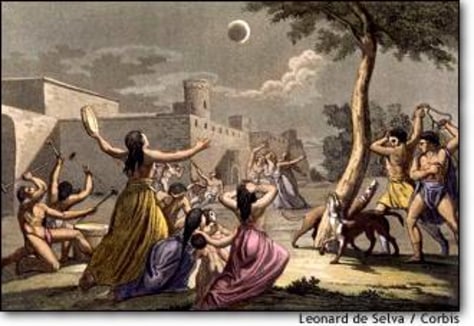
Despite his confusion about the size of the earth, Columbus was a decent navigator, he did make contact with another culture, and he did find gold. If you think any of that was easy, read this story about how he was stranded on Jamaica for a year. A few of his men found their way back to Haiti(then called Hispaniola) in what was essentially a canoe. This was also the time he lied to the natives about controlling the sun when he knew of an eclipse that was coming. He did it to gain favors from them. Anyone who tells that story without also telling of how he did it when he was cut off from anything resembling his civilization, is essentially lying by omission.

The above link also mentions Bobadilla. This was another reason I picked up the book. I had heard of a letter that had recently been uncovered listing many crimes of Columbus. You may have heard of it. As I read the book, I kept expecting to hear about these crimes, but they weren’t listed, at least not coming from Columbus. Columbus writes about events going on across the island that were out of his control and that he did not condone. Maybe he could have done more to prevent them.

Instead of entries about thoughtless treatment, I read of how he had to leave some men behind on his first voyage and gave them strict instructions to stick to themselves and not bother the natives. Now, he also took natives with him against their will, so he was no saint. When he returned he found the men he had left behind had fought with the natives, and they (Columbus’ men) had been killed. Getting their killers to describe what had happened of course would have been a challenge.

The history of the rest of what happened during Columbus’ life is, shall we say, muddled. He was told by Spain not to take slaves, but he did anyway, even sending some of them back to Spain. There seemed to be no penalty for this. Even at the time, Ferdinand and Isabella couldn’t figure out what was going on and had to send investigators. The second voyage was definitely a military mission and included priests and farmers who established colonies. Those priests complained that in some of those colonies the slaves were mistreated. To me today, “mistreated slave” is kind of an oxymoron. You’ve already taken someone away from their culture and made them work for free. How is that okay, but there is still a further line that crosses into “cruelty”?

It is hard to tell from the few records we have, but the theme of the book I read was that many of the people who were brought to colonize this new world expected gold to be flowing out of the hills and slaves to bring it to them. When they found out they had to work, and that the “New World” had new diseases, they blamed Columbus for mismanagement. This is when Bobadilla enters the story and puts Columbus in chains.

When the story is told as if everything in Bobadilla’s letter is true, it sounds strange that Columbus was released and allowed to return, although he was stripped of his governorship. It makes more sense when you read accounts of the monarchs who found it strange that Columbus arrived at court in manacles. This was perhaps a shrewd political move by Columbus because the Captain of the ship that took him home offered to remove them. But Columbus wanted his patrons to see how Bobadilla had treated him. I lean more toward the theory that Bobadilla wanted to rule the territory without having had to do all the work of discovering it.

I can hardly summarize a book in six paragraphs and everything I’ve said comes with a disclaimer that the history is incomplete. My intention here is to supply a little more background than a painting from 500 years ago or a scrap of evidence with no context. How we treated the people we called “Indians” in later centuries; cutting their hair, making their language illegal, killing off the buffalo, all of that is inexcusable. It was also supported by our government after we had made a constitution that spoke of freedom and human rights. It was perpetrated by Presidents that we call heroic. Anyone living in the United States today benefits from those policies, excluding of the course many of the descendants of the people who were here first. We would be better off discussing how that affects people alive today than either celebrating or denigrating a man we know little about from 500 years ago.


Monday, September 28, 2015

Not so alone

Another thing that kept me away from blogging last month was that I spent half of it in Alaska. I wrote a two page epic hiking adventure in the journal at a yurt one night, visited a couple Russian churches, and took a few notes on my visit to a cabin in the wilderness that is on the National Registry of Historic Places. The cabin was built by Richard Proenneke and has been made semi-famous by a half-hour documentary featuring him.

He is known for his longevity, he spent 30 years in that cabin. He was also known for his craftsmanship, the handle mechanism on the door is ingenious. He is a little lesser known for his environmentalism.

In 1967 he was retired from the Navy and decided that building a cabin in Alaska would be a challenge he’d like to try. Challenging himself was a way of life. He had a friend who had a cabin on Upper Twin Lake, just north of Port Alsworth, so he spent that summer walking the area, finally settling on a spot right next to his friend.

There were no hardware stores in the area so whatever he needed, he had to bring or build. Space was saved by bringing only the metal parts of drills or chisels and fashioning the handles once he was there. This also led to one of my favorite lines from the documentary, “today I needed a spoon, so I made a spoon.”

His skills were excellent, and his hiking pace was legendary, but many people have accomplished such things in Alaska and elsewhere. Mr. Proenneke felt the lifestyle of accomplishing things on your own, not wasting anything and spending time reflecting on the wilderness, was worth sharing, so he also filmed himself as he built and stocked the cabin. Originally, he probably had no more in mind that simply making some instructional manuals so others could share the experience.

As he returned to that isolated wilderness year after year, he noted changes in people who came to the area. He saw people no longer caring about the values he cherished. Something you’ll see in his film or if you visit his cabin is a lot of gas cans. He fashioned many useful storage and carrying items by recycling old gas cans. But where did they come from? He didn’t have a chainsaw or gas stove. They came from the hunters. They would come out, shoot their moose and sometimes leave everything behind except the antlers.

He wrote not only about how to live in the woods but of the experience. Others, Sam Keith in particular, put those journals and film into production and he gained a little fame. This was not his goal, since of the gifts he said, “My cabin and cache have been full to overflowing for quite some time and each new load makes me wonder where I will stow it all. ... I do appreciate everything but wish they would consider the poor miserable brush rat more fortunate than they and spend their money to beat death and taxes.”

When you see him talking about himself, it’s easy to assume a level of conceit, but if wasn’t for his friends, we probably would have never heard of him. One of the park rangers at the cabin said he corresponded with Aldo Leopold and Willard Munger, but I haven’t been able to confirm that. She said Dick did not save his letters, something that comes from living a sparse lifestyle. So whatever he did, that’s lost to history.

Summing up my feelings about this pilgrimage has been more of a challenge than I expected. The man remains a bit of a mystery, and as with any public figure, he’s what each of us want him to be. What struck me most on this trip was that he did not harbor much anger. In any of the short descriptions of him, no one ever called him “crusty” or a curmudgeon. Instead they went out of their way to note how friendly he was despite his isolation. Even his hunting was kept to a minimum, apparently out of a kinship with the animals who shared his valley.

This is not to say that he withheld his opinion. Throughout his discussions about carving handles or constructing a food cache he scatters tidbits of the value of making something useful, and being able to make something with quality and craftsmanship. He ends his first book with a longer discussion on those philosophies and on the positive affects it would have on all of us if more people adopted them.

To try to give some sense of the man, here’s part of a note that was left on his table,

“You didn’t find a padlock on my door (maybe I should put one on) for I feel that a cabin in the wilderness should be open to those who need shelter. My charge for the use of it is reasonable, I think, although some no doubt will be unable to afford what I ask, and that is – take care of it as if you had carved it out with hand tools as I did. If when you leave your conscience is clear, then you have paid the full amount.

This is beautiful country. It is even more beautiful when the animals are left alive.
Thank you for your cooperation.”
R.L Proenneke

Somehow he managed to be “alone” yet engaged. While alone he was listening to the world. He saw the rise of polluters from the hunters to corporations. He also saw that just as no single person can solve our environmental problems, no single person caused them. Instead of loudly broadcasting anger over the changes in the world he did not care for, he quietly showed us how to live not just in nature, but with each other.

Monday, July 6, 2015

Why I think this world should end

I don’t think that, but this rapper does. Here’s a few of the lyrics from his poem:


Isn’t that special? Whenever I hear something like this, my first question is, compared to what? By “world”, he means this particular version of civilization, and that’s happened a lot. That’s why we have Mayan RUINS and the Great Wall is now just a tourist attraction and why we marvel at buildings built thousands of years ago that are still standing, but the people are gone. Civilizations end.

The difference today is scale. If you compare us to a primitive village, they polluted their streams, then they just moved away from it, upstream. Why did you think they were nomadic? Did they just like to travel? My favorite though is “education is shot”. This from a guy who knew more than most people in history by the time he was 10 years old. This from a guy who has a command of the English language and has uploaded it onto a world wide communication system that I watched from little cabin in the woods in mid-Northern nowhere.

And if you can’t live with yourself, get help.


So everyone’s medicated
We pass each other on the streets
And if we do speak it's meaningless robotic communication
More people want 15 seconds of fame
Than a lifetime of meaning and purpose
Because what’s popular is more important than what’s right
Ratings are more important than the truth
Our government builds twice as many prisons than schools
It’s easier to find a Big Mac than an apple

And when you find the apple
It's been genetically processed and modified

Presidents lie, politicians trick us
Race is still an issue and so is religion
Your God doesn’t exist, my God does and he is All-Loving
If you disagree with me I'll kill you
Or even worse argue you to death
You think that’s new? There are 7 billion people on this planet, someone’s talking about sex somewhere. And games change. Go get a dreidel if it makes you happy.

The average person watches 5 hours of television a day
And it's more violence on the screen than ever before

Again, before what? I grew up seeing the violence in Vietnam on TV. It’s why we ended Vietnam, because we were aware of it. Or we could go back to seeing violence in the streets, I’m not just talking about Detroit, go for a walk in Paris in the year 1420, be sure to wear your knife. Or how about that great civilization of Rome? The Pax Romana was maintained by killing anyone who threatened it. Then they’d nail you to a cross in public as an example, you might have heard of this practice.

Technology has given us everything we could ever want
And at the same time stolen everything we really need
Pride is at an all time high, humility, an all time low
Everybody knows everything, everybody’s going somewhere
Ignoring someone, blaming somebody

I’m going to give him the benefit of the doubt and say this is intentional irony.

Not many human beings left anymore, a lot of human doings
Plenty of human lingerings in the past, not many human beings

Money is still the root of all evil
Yet we tell our kids don’t get that degree
The jobs don’t pay enough

Good deeds are only done when there's a profit margin
Videos of the misfortunes of others go viral
We laugh and share them with our friends to laugh with us
Our role models today
60 years ago would have been examples of what not to be

There are states where people can legally be discriminated against Because they were born a certain way

It’s natural to fear the unknown, those who aren’t like us. It is a survival mechanism that goes back to our earliest ancestors. We are now aware of it and are learning to trust and live together. Look at your main street and count how many different churches there are. Now show me a town in history, more than 500 years ago, that can beat that number. For most of human history, your leader decided what your religion was and if you didn’t like it, you had to leave. If you were lucky you could leave with all your body parts intact. Go back far enough and it wasn’t even called religion, it was just the culture of your tribe, your way of life.

Prejudice is taught, no doubt. But it is also created by a few people who’s fear of change and feelings of being threatened get out of hand and the blame they place is believed by others. Everyone is “born a certain way”, with different advantages, physical and social. We created this “all men are created equal” thing a mere 250 years ago, and we didn’t have it right then, we left out women, obviously, and everyone at the time knew they meant “white” men. We have since improved on it, but there is still work to be done.

If you don’t know this, you weren’t paying attention in High School history. Read a book. If you are learning this from a rap song, you’re behind in your education. We need you to get caught up and join those of us who are working toward a more just and peaceful world.

Companies invest millions of dollars hiring specialists to make Little girls feel like they need “make up” to be beautiful Permanently lowering their self esteem
Because they will never be pretty enough
To meet those impossible standards

I kinda covered this in the sex part above. Really? You think treating girls like sex objects is new? Really? Ever hear of foot-binding? http://www.smithsonianmag.com/ist/?next=/history/why-footbinding-persisted-china-millennium-180953971/

Corporations tell us buy, buy, buy, get this, get that
You must keep up, you must fit in
This will make you happy, but it never does for long
So what can we do in the face of all of this madness and chaos?
What is the solution? We can love
Not the love you hear in your favorite song on the radio
I mean real love, true love, boundless love
You can love, love each other
From the moment we wake up to the moment we go to bed
Perform an act of kindness because that is contagious
We can be mindful during every interaction
Planting seeds of goodness
Showing a little more compassion than usual
We can forgive
Because 300 years from now will that grudge you hold against Your friend, your mother, your father have been worth 
it?
Instead of trying to change others we can change ourselves
We can change our hearts

Okay, now we’re getting somewhere. This is a song. It’s not action, but it is a call to action, and we need that. What we don’t need is more angry people shaking their fists at things they don’t understand. It doesn’t do much good to get angry at those you say are making you angry. If that’s what they want, and you say it’s not what you want, then why are you doing it? Be angry, it’s an indicator that you’re alive, but you don’t need to feed that anger. Of course life is hard and something’s wrong. We used to live in trees until someone decided that was stupid. The question is, what are you going to do?


We have been sold lies
Brainwashed by our leaders and those we trust
To not recognize our brothers and sisters
And to exhibit anger, hatred and cruelty
But once we truly love we will meet anger with sympathy
Hatred with compassion, cruelty with kindness
Love is the most powerful weapon on the face of the Earth
Robert Kennedy once said that
Few will have the greatness to bend history
But each of us can work to change a small portion of events
And in the total of all those act
Will be written in the history of a generation
So yes, the world is coming to an end
And the path towards a new beginning starts within you

Thursday, May 28, 2015

A Courageous Pastor

I'd like to walk you through another post about one of those liberal pastors that I often write about. This one does not end with me being disappointed about how much like a fundamentalist she is. She takes a step beyond any pastor that I ever met. She is not afraid to let us know what she actually learned in seminary school. She's not afraid to challenge her leaders to move forward with her, even if it threatens her career.

In a letter to those leaders, she says belief in “the existence of a supernatural being whose purposes can be divined...” can lead to violence. There's a little more to it if you read the full article, but even in her more nuanced form, it's pretty strong stuff. She says something, that if I say it, I'm told I focus too much on the negative aspects of religion, and that Christianity has “reformed itself”. She says, “This belief has led to innumerable tragedies throughout the timeline of human history and will continue to do so until it fades from our ravaged memory.”

That's going pretty far, admitting that religion still has work to do to bring itself into a modern world where wars must be justified on grounds other than a difference in theology. Unfortunately this rather obvious statement has to be made by someone who is considered progressive and when she says it, someone calls for her resignation just for saying it. I think Christianity and all religion needs to go a lot further. She goes a little bit further with this statement, “If we maintain that our moral framework is dependent upon that supernatural being, we allow others to make the same claim and must defend their right to do so even if their choices and acts are radically different from our own; we do not hold the right to parcel out divine authority only to those with whom we agree.”

First, in case you don't recognize it, or don't know much about Richard Dawkins or Christopher Hitchens, she is saying, all religions can't be right. Dawkins and Hitchens take this a step further and say, therefore, most likely all of them are wrong. But without going there, we are left with the choice of figuring out which one is right using some sort of method of discernment that we can all agree on, or killing anyone who disagrees. The latter has not worked out too well and the former is now called science. Like it or not, meditation and divine revelation are increasingly unacceptable in government or any institution, except theocracies and churches. When governments or businesses need a question answered, they turn to science.

But put that aside if you must and consider the implications of what she says. She is asking you to consider the consequences of choosing a supernatural explanation. By definition you have no natural explanation for that. You can't prove it, except by personal experience, and you are giving up the need to prove it, it's a choice made on faith. If you can do that, how can you turn around and deny someone else the right to do the same? Obviously you don't deny your fellow parishioners that right, but how do you feel about someone from a different religion, a different denomination, or someone who just doesn't understand Jesus like you do?

Greta simply asks that you extend the same courtesy to all believers that you would to your grandmother. I don't know enough about Greta, but my guess is she is calling for this level of tolerance because she believes it is a request that religious people will consider. I don't know if she sees it as a step toward something else, or as an end in itself. We all know that asking people to not believe at all is very unpopular.

But what is she trying to accomplish? This article was written right after a couple major events of religious violence. We look to the purveyors of reason and peace at those times, but is that the church? The argument is that if we lose the churches, we lose the holders of the rules, the houses of ethics, the ones with the soup kitchens and the shelters. Without them, it's anything goes. This works when the religion is in complete control. People do survive without it as history as shown with religions that have collapsed, but the culture is lost.

But look again at what she's asking. She's asking, let me choose my system of ethics based on nothing but tradition and I will leave you to choose yours based on a completely different tradition. Traditions that are well known to include justifications of violence. She is saying she has the right to choose an institution simply because it exists and has some history of doing some good. Well, Nixon opened negotiations with China and Clinton reduced the deficit, but I have a lot of other reasons for thinking which one of those is the better president. But I'm not arguing with her right to make that choice. I prefer a free world where such choices can be made and I'm willing to live with the consequences of that.

It's a bit ironic here that in her attempt to promote a world of reason, she suggests that anything goes. She ends up allowing for what all religions say about atheism. They say that if you are choosing atheism, you are choosing hedonism. Religions say they have the right set of rules to live by and they have the moral authority to set them. Some go as far as to say it is impossible to base moral rules on anything except their god. Without their god, there can be no basis for morality. Most at least claim a long standing tradition or the authority of many generations who have refined those rules.

We now have better ways of determining rules. We listen to the voices of not just those with land or weapons or those who happened to be born where the ground is more fertile or the animals could be domesticated or whose parents were in positions of power, but to everyone. These new systems still have some of the old problems, but solutions for them are not coming from the old voices.

Oddly enough, although I believe in freedom, I also believe in holding others accountable for their actions, in requiring explanations for actions. I don't accept someone else's moral system with the agreement that they will accept mine. If they are going to share my government, my schools, my health system, I expect some pretty complicated negotiations about just what is agreeable. I'll defend everyone's right to be free, but that doesn't include the right to restrict my freedoms without reason.

In a separate interview, Greta said her church has stopped most of the traditional rituals of a church. They stopped teaching the children the Lord's prayer because the parents said they didn't want them learning that they should believe those things and have to figure out for themselves later if they choose not to. If you have ever thought this, I encourage you to bring it up with your church leadership. If they aren't supportive, ask around, you might find out there are more just like you.

Interestingly enough, around that same time, a different pastor posted a statement that went quite a bit further. Greta even links to him via her blog page. I can't evaluate what this guy is doing, or if I'd join his “belief-less church” without spending some actual time there. But it's starting to sound like something that is truly workable in a tolerant pluralistic world.


Wednesday, May 6, 2015

Shouldn’t we just let them die?


@starvingAfrican
I hear this phrased in more benign terms from some of the nicest people I know. And, if you’re being completely objective, the question of whether or not we should work to sustain a population of 7 billion and growing is a valid question, worth considering. But if you decide that it’s better for fewer people to be alive so that more of the living can have a higher quality of life, you have put a rather heavy burden on yourself. You have to choose who dies.

It’s been said that all great men are also bad men. If you look at all of the presidents of the United States, no matter how you rank them by greatness, all of them sent people to their death. Alexander THE GREAT, killed a lot of people. Ghengis Khan decided that it would be better if there were less Chinese and solved the problem the old fashion way. Recently, more and more women are joining the ranks of great leaders. But most of don’t think that way, and don’t have to.

It’s a little more benign to look at a population that is struggling, perhaps starving and instead of asking if we should kill them, ask how much help should we give them? Parents have to make that kind of decision with their own children all the time. How long do you allow them to live in your basement? Maybe a better analogy is our neighbors or friends. Do we keep letting them borrow our tools and giving them cups of sugar, or do we start dropping hints about their lifestyle choices?

If you just arrived here by spaceship and looked at the situation, you might see a hopeless situation in sub-Saharan Africa and wonder why any effort is being put into it. I could say those are not very compassionate creatures in the spaceship, but that would be only focusing on the compassion for the starving children in Africa. Maybe those aliens are feeling compassion for the countries who can grow plenty of food, but still need to consider how to take care of their own.

Now we’re into a classic moral dilemma of the choice of killing one person or five. Most people want to find a way out of having to make that decision.

 
The answer is easier than you might think. We didn’t just arrive here on a spaceship. We have well documented history of how we ended up with 2 billion people living on a few dollars a day.

One graphic example is Haiti. In the Western Hemisphere full of prosperous nations and fertile land, they are impoverished and hungry. Even on their little island, things get better just by crossing the border into the Dominican Republic. Both sides of that island get the hurricanes and earthquakes, how can they be so different? The reasons go all the way back to where Columbus happened to land and how Spain divided it up, how they cut the trees in Haiti and shipped them off to Europe while the Dominican Republic decided to create a slower growing but more sustainable economy, but a big part of Haiti’s problems happened in my lifetime.
Haiti border with Dominican Republic

Their problems are the result of a decision made early on when America first started sending food aid to other countries. The decision was to not make aid a burden on our farmers. If we were to help other countries with food, that should be something all of us participate in. To do that, our government buys surplus commodities in years when yields are high. Instead of letting the price drop so farmers lose money and even go bankrupt, we all buy that surplus with our tax dollars. Some of it is stored and some is sent to where there is drought or war or natural disasters or wherever there is need.

Haiti has been a recipient of aid like this. Then in the 1990’s, with bipartisan support, tariffs on U.S. rice imported to Haiti were dropped from 50% to 3%. Rice produced in Haiti that was selling for over $5, now competes with subsidized U.S. rice for around $3. Sounds great for us, but what happened there? Haiti doesn’t have the infrastructure we have. They don’t have grain elevators. They don’t have loans for farmers. That doesn’t mean they don’t have farmers. It means those farmers bank on their crops coming in every year and getting a decent price. Economics 101, what happens when you dump a huge surplus of a commodity into a delicate economic system like that?

By providing aid to Haiti in the way we did, we made the work of all of those farmers worthless. It only took one season for many, over half of them had no choice but to sell everything, move to the city, try to find work, and take the handouts we gave them. We destroyed what fragile agri-business they had.

www.acumen.org
I said the answer was easy, and maybe I over simplify it, but in a sentence, what we should be doing is sending our technology, our ideas about building infrastructure, not just food. Sure, sometimes the food isn’t there, no matter what you do right, and we make the choice of letting our surplus rot or feeding someone who is dying. I don’t find that a hard choice. The hard choices are how much to give away, how to assist without creating dependency, and how to decide when a nation is ready to be on its own.

If you only take that spaceship view and ask why should we help them when they are doing nothing for us, again, look at history. Look at how we stripped resources from Haiti and Africa not to mention exploiting their labor. Europeans did not build the U.S. from a wilderness. It was being farmed and managed long before we got here.

www.heifer.org


We’re getting better at all of this. The Heifer project doesn’t give away food, it makes a loan of living animals or farming supplies with the expectation that will be paid back. And it usually is. Building infrastructure doesn’t need to be done for free. It may seem strange to profit from an impoverished population, but you’re wearing clothes and using technology that does just that. It can be done in a way that grows their economy and leads to sustainability instead of destroying whole environments. Acumen and Oxfam have been doing this for a long time.

The original question then looms up again, but in different a way. If we grow the economy in these starved areas, won’t they just have more babies? Historically, the answer to that is no. When people see a society that will care for them in old age, they don’t have a bunch of children in the hopes a few of them will live and be able to support them later. That’s the kind of decisions humans made for hundreds and thousands of years. It’s why you are here, but we have better ways of surviving now. When there is a middle class, when people can see a bright future for their children, they have less of them. The phenomenon of well off people having large families is very recent, and I hope it is isolated.
This has happened consistently for hundred of years, since we have been transitioning from an agrarian society to an industrialized one and hopefully now into a sustainable one. This is not a dream. It is not a fantasy. It’s already being done in small ways. We don’t have to choose between our own survival and the survival of millions of starving babies. Our actual choice is between ignoring our neighbors or getting to know them and how what we do affects them.