Friday, October 16, 2015

Secrets of Proenneke Cabin

"He gestured vaguely and mentioned a few landmarks along the way, being careful not to make it too easy."

I read a version of the legend of Parceval just before heading off to Alaska this summer. My trip was not legendary, except perhaps in my own mind. The words above however, taken from that story, were with me. The scene is a young Parceval, living in the woods, unaware of Camelot. Two Knights appear and see something in the boy, but only give him enough to awaken his sense adventure.

The attitude toward hiking in Alaska is different than most places I've been. Most parks and wilderness areas will have a variety of warnings and requirements. Where I went in Alaska, there were no permits required, I didn't need to check-in anywhere, if I hadn't initiated contact, they wouldn't have known I was there. There was no signage, no trailheads, no warnings posted.

Part of this is, I'm sure, due to the sheer enormity of the space and the barriers that have to be overcome to get there. Most of the filtering out of people is done by nature. If you manage to get by the mountains, the snow and the freezing water, there are the bears. Let's hope the Alaska Department of Natural Resources isn't thinking that they want to throw you the wolves, or bears, or whatever else might be out there, but they definitely expect you to figure out more for yourself than your average walk in a park.

In Minnesota, before entering the Boundary Waters Canoe Area Wilderness, you are required to get a permit and watch a video about hanging a bear pack and "leave no trace" camping. When I hiked the Grand Canyon, there were a lot of signs up about dehydration and how it is most common that fit young men are the ones who succumb to it, because they are most likely to think they won't. There was nothing like this for the Lake Clarke Wilderness. There also weren't trails.


There is a sketchy explanation of the a few hikes around the Proenneke cabin area on the NPS website. http://www.nps.gov/lacl/planyourvisit/low-pass-route.htm The hike I originally planned involved walking along the lake shore and, as their description says, "you should be able to discern which drainage will lead to Low Pass because it's the most significant one in the vicinity...". Now, without surveying the entire area, I don't know how you would determine "most significant", worse, as far as I can tell, the directions start off sending you east, when you should go west. After that, they say, "follow the tundra ridge to the pass."

I wanted to make this a loop route, and the Low Pass description says that at some point, that will lead you to the Hope Creek route. That description refers you to the Hope Creek route description, which says that at some point, it will lead to the Low Pass route. That's as good as it gets.

I have some experience with reading topographic maps, but if a pass has a name, I don't know how you find it without that name appearing on the map. I read a few other descriptions written on wilderness guide websites, but I would expect them to be vague, since they want you to pay them for what they know. I thought I had hit pay dirt when I found someone's homemade map, a satellite photo with a big arrow on it that said "Low Pass". I matched that up to my topos and found a wide area that was at 3,000 ft, surrounded by the 5,000 or more foot peaks. This seemed to be "significant".

In case I sound like someone who was proceeding foolishly, I was, but I wouldn't have tried this without someone who had some experience along with me. Luckily I have a brother who lives in Alaska and has worked in the brush. He reviewed my plan and said it was aggressive. Actually he said, "whoa, whoa, whoa". Anyway, we changed the plan to the Hope Creek route. This one proceeds due south from the cabin, following a creek. It even starts out with some trail, but that trail quickly starts to break up.

By the way, I looked for books on hiking in Alaska. I checked guide books, there was less in them than what I found on the NPS site. On the drive to Homer, we stopped at a map shop. Nothing. I found a copy of a National Geographic map of Lake Clarke park on sale on amazon. It was $350. Apparently paper maps are a collector's item. I was hoping maybe one of the float plane operators I talked to would give me a little free info, but most of them hadn't even been there.

Crossing the mountains on the way there gave me some appreciation of what I was getting into. It's a mere 20 miles or so on the map, but looking down on the cliffs and snow covered peaks, I knew I wouldn't be walking out of there if anything went wrong. It was a little bit of a relief when we were greeted on the radio as we flew up into the Twin Lakes valley. We landed right at the cabin, which is just a few feet from the water and were greeted by a rainbow that also came right down to the water. I realized that was something special when I saw how excited the park ranger and float plane pilot were. I would have thought that was something they see every week.

After spending some time in the historic cabin and getting the obligatory picture in the doorway, we tried again to get intel on the hike from our park ranger. We got a couple more details on the Hope Creek route, but it ended with the same "then you get up on the ridges and you can follow them over to Low Pass." She literally waved her hand over the map at this point. Once again, "whoa, whoa, whoa." But that was the best we were going to get.

The actual experience was, as my brother expected, much slower than I expected. If we had known better about where we were going, we might have made it over the ridge and back down the other way. After a day and a half of hiking, we made it to a ridge, and could see where it went over into the next valley. Ridge hiking is a much easier hiking experience than the side of mountain covered with low bush cranberries and blueberries and various lichens. But there were many unknowns beyond that and no reason to challenge them.

When we got back, we met one more park ranger, and that one finally pointed right to a spot on the map and said, "that's Low Pass". It was the next valley over, much more narrow than the one I had found and another 1,000 ft higher. I could also see by looking at where the streams started, that there had to be ridges between them, and by following those high spots, it would lead you right to the ridge we had stood on above Hope Creek.

I didn't actually go there, so don't take these directions as anything close to a suggestion that you go there and follow them. I can't know what was over the high point that I saw. Just before we got to the ridge, we had a choice between a 200 ft mound of boulders and a scree slope. I choose poorly and could have easily lost a lot of progress or been injured sliding down that. Some scree is listed on maps, but most of it isn't. If a description of an Alaskan hike says "This route crosses a couple steep scree slopes", as the Low Pass description does, you should take that very seriously.

There are many things to do around the Proenneke cabin. There is a small camp site right there with metal caches to keep the bears away from your food. You can hike the shore line. There is one rustic lodge on the opposite side of Upper Twin Lake. Port Alsworth is not far away on a large lake with many lodges. Many people fly from there and visit the area for a just a couple hours. I would recommend any or all of those. Whatever you do, don't miss enjoying the incredible scenery.


Tuesday, October 6, 2015

In 1493, Columbus took everything he could see

It’s one of my favorite time’s of year again, when people talk about how Columbus ruined everything. Don’t get me wrong, I’m no big fan of the European take over of what is now called the Americas. I’m also not a fan of bad history. According to the memes that come out this time of year, Columbus invented slavery.

There is no question that the particular brand of slavery that existed from Africa to America and included the natives in the Americas was particularly horrible in human history. There is no question that Christianity supported slavery and it was in turn supported by the Old Testament. It is also unquestionable that slavery has been a part of every civilization. It’s elimination is very recent and very unique. The colonizers that began with Columbus are not unique at all.

Slavery in the Americas began thousands of years before Columbus ever got there. And I’m not talking about the Vikings. Native tribes conquered and enslaved each other. I’m not going to provide links, by the way, since this is too well known to bother. Also well known is the participation of Africans in the African slave trade. None of this makes any of it right. That something has been done throughout human history is not an argument for it being normal, ethical or intractable. People who took slaves were always wrong. They were also products of their environment.

One easily misused statistic is the number of people who died in the centuries following 1492. It was on the level of the Nazi holocaust. Pre-Columbian population figures are a little hard to come by, but deaths were in the millions. We know there were conquistadors sweeping across the southern continent and small colonies moving in along the east coast at this time. But millions of deaths spread across vast stretches of territory that were unmapped by Europeans have to be accounted for. The only sensible explanation is disease.

The Americas were first populated by people crossing the Bering Strait land bridge 10,000 years ago. Generations of living in extreme cold in Siberia and the tundra of the Americas killed off a lot of immunity that people in Europe maintained. Europe and Asia have cows, pigs and horses and constant contact with those animals weeded out anyone not immune to the diseases they carry. When they came back in contact with their cousins that they had parted with so long ago, they brought those diseases with them.

No, I’m not ignoring that this was later done deliberately, but that was much later. Missionaries that gave Indians infected blankets did not exist until colonies were well established. Missionaries can’t exist at all without a strong military presence protecting them. The history of that is also confused and sometimes exaggerated, but it certainly had nothing to do with Columbus.

Neither am I ignoring that by today’s standards, Columbus was a wack job. I recently read “Columbus and the Quest for Jerusalem”. The title alone grabbed my attention. He never went to Jerusalem, but according to his own diary, his intention for finding a route to India was to enrich Spain and the Catholic Church so they could re-conquer Jerusalem. If you remember, Jerusalem was under Muslim rule at the time. Columbus would out fundamental any fundamentalist of today. And why not? That’s all there was. There was no discussion about freedom of religion, you took the religion of your kingdom, or you got out of there, alive if you were lucky. If the Pope said slavery was okay, it was okay. Martin Luther was only 9 years old. It was a different time that we can barely understand. Having Christians in control of the birthplace of Jesus was vitally important to the survival and future of Columbus’ culture. The idea of Jews at the Wailing Wall, the sound of the Muslim call to prayer and tours of Jesus’ tomb all in one city would be unheard of to him.

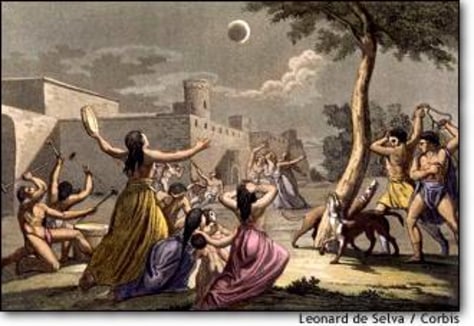
Despite his confusion about the size of the earth, Columbus was a decent navigator, he did make contact with another culture, and he did find gold. If you think any of that was easy, read this story about how he was stranded on Jamaica for a year. A few of his men found their way back to Haiti(then called Hispaniola) in what was essentially a canoe. This was also the time he lied to the natives about controlling the sun when he knew of an eclipse that was coming. He did it to gain favors from them. Anyone who tells that story without also telling of how he did it when he was cut off from anything resembling his civilization, is essentially lying by omission.

The above link also mentions Bobadilla. This was another reason I picked up the book. I had heard of a letter that had recently been uncovered listing many crimes of Columbus. You may have heard of it. As I read the book, I kept expecting to hear about these crimes, but they weren’t listed, at least not coming from Columbus. Columbus writes about events going on across the island that were out of his control and that he did not condone. Maybe he could have done more to prevent them.

Instead of entries about thoughtless treatment, I read of how he had to leave some men behind on his first voyage and gave them strict instructions to stick to themselves and not bother the natives. Now, he also took natives with him against their will, so he was no saint. When he returned he found the men he had left behind had fought with the natives, and they (Columbus’ men) had been killed. Getting their killers to describe what had happened of course would have been a challenge.

The history of the rest of what happened during Columbus’ life is, shall we say, muddled. He was told by Spain not to take slaves, but he did anyway, even sending some of them back to Spain. There seemed to be no penalty for this. Even at the time, Ferdinand and Isabella couldn’t figure out what was going on and had to send investigators. The second voyage was definitely a military mission and included priests and farmers who established colonies. Those priests complained that in some of those colonies the slaves were mistreated. To me today, “mistreated slave” is kind of an oxymoron. You’ve already taken someone away from their culture and made them work for free. How is that okay, but there is still a further line that crosses into “cruelty”?

It is hard to tell from the few records we have, but the theme of the book I read was that many of the people who were brought to colonize this new world expected gold to be flowing out of the hills and slaves to bring it to them. When they found out they had to work, and that the “New World” had new diseases, they blamed Columbus for mismanagement. This is when Bobadilla enters the story and puts Columbus in chains.

When the story is told as if everything in Bobadilla’s letter is true, it sounds strange that Columbus was released and allowed to return, although he was stripped of his governorship. It makes more sense when you read accounts of the monarchs who found it strange that Columbus arrived at court in manacles. This was perhaps a shrewd political move by Columbus because the Captain of the ship that took him home offered to remove them. But Columbus wanted his patrons to see how Bobadilla had treated him. I lean more toward the theory that Bobadilla wanted to rule the territory without having had to do all the work of discovering it.

I can hardly summarize a book in six paragraphs and everything I’ve said comes with a disclaimer that the history is incomplete. My intention here is to supply a little more background than a painting from 500 years ago or a scrap of evidence with no context. How we treated the people we called “Indians” in later centuries; cutting their hair, making their language illegal, killing off the buffalo, all of that is inexcusable. It was also supported by our government after we had made a constitution that spoke of freedom and human rights. It was perpetrated by Presidents that we call heroic. Anyone living in the United States today benefits from those policies, excluding of the course many of the descendants of the people who were here first. We would be better off discussing how that affects people alive today than either celebrating or denigrating a man we know little about from 500 years ago.


Thursday, October 1, 2015

The Least of These

I occasionally review my posts to see if I said something I want to retract. I don't edit out what I said, but have commented on myself a few times. Recently, at the Lake Superior Free Thinkers regular meeting, we had a philosopher, Shane Coultron, speak who corrected me on something I've mentioned now and then. That is, I have said I can't find a similar statement about the Christian idea of "that which you do to me (Jesus), you do to the least of these (i.e. the poor or sick)."

Turns out that is addressed by modern philosophies, it's just not as easy to find in a short concise phrase like it is in the New Testament. Shane gave me several examples:

Utilitarianism - If you are simply adding up happiness and basing choices on increasing it, you would do well to focus on down trodden, poor, sick people. Their happiness rating is lower. This is born out with sociological data, although there are those communities of people with limited means that are quite happy. Utilitarianism does not make broad generalizations about what it takes to be happy. The important application of it here is that if you focus on those who have the most needs, you will make the most difference in increasing their happiness and likewise increase overall happiness for all. This includes the assumption that even if you are well off, it makes you sad that others aren't. Again, plenty of exceptions to that assumption, but they don't matter to the overall score.

But Utilitarianism has other problems, and I don't like defending it too strongly.

I prefer the more subtle assumptions and laws discussed in what is sometimes called Social Contract Theory. The idea that we came out of the jungle and made agreements to act in ways that are mutually beneficial. In this system, ignoring the needs of any group has a cost. If there is not good reason to restrict someone's rights or to not reward them for their contribution, they can reasonably consider the social contract to be broken. As society has advanced, we have created better peaceful means of addressing these grievances, but many remain.

History shows us how this plays out. Marx's analysis of the cycle of cultures working together to increase their wealth, then that wealth becoming concentrated, then revolution, has strong historical data to back it up. We see it happening again now, but we also see more negotiating under way. Hopefully this time around we will acknowledge "the least of these" and find a way to re-establish the contract.

I'll just mention that Shane said Kant's de-ontological ethics also addressed this issue, but I don't find Kant particularly interesting so I leave it up to you to look into that.

Monday, September 28, 2015

Not so alone

Another thing that kept me away from blogging last month was that I spent half of it in Alaska. I wrote a two page epic hiking adventure in the journal at a yurt one night, visited a couple Russian churches, and took a few notes on my visit to a cabin in the wilderness that is on the National Registry of Historic Places. The cabin was built by Richard Proenneke and has been made semi-famous by a half-hour documentary featuring him.

He is known for his longevity, he spent 30 years in that cabin. He was also known for his craftsmanship, the handle mechanism on the door is ingenious. He is a little lesser known for his environmentalism.

In 1967 he was retired from the Navy and decided that building a cabin in Alaska would be a challenge he’d like to try. Challenging himself was a way of life. He had a friend who had a cabin on Upper Twin Lake, just north of Port Alsworth, so he spent that summer walking the area, finally settling on a spot right next to his friend.

There were no hardware stores in the area so whatever he needed, he had to bring or build. Space was saved by bringing only the metal parts of drills or chisels and fashioning the handles once he was there. This also led to one of my favorite lines from the documentary, “today I needed a spoon, so I made a spoon.”

His skills were excellent, and his hiking pace was legendary, but many people have accomplished such things in Alaska and elsewhere. Mr. Proenneke felt the lifestyle of accomplishing things on your own, not wasting anything and spending time reflecting on the wilderness, was worth sharing, so he also filmed himself as he built and stocked the cabin. Originally, he probably had no more in mind that simply making some instructional manuals so others could share the experience.

As he returned to that isolated wilderness year after year, he noted changes in people who came to the area. He saw people no longer caring about the values he cherished. Something you’ll see in his film or if you visit his cabin is a lot of gas cans. He fashioned many useful storage and carrying items by recycling old gas cans. But where did they come from? He didn’t have a chainsaw or gas stove. They came from the hunters. They would come out, shoot their moose and sometimes leave everything behind except the antlers.

He wrote not only about how to live in the woods but of the experience. Others, Sam Keith in particular, put those journals and film into production and he gained a little fame. This was not his goal, since of the gifts he said, “My cabin and cache have been full to overflowing for quite some time and each new load makes me wonder where I will stow it all. ... I do appreciate everything but wish they would consider the poor miserable brush rat more fortunate than they and spend their money to beat death and taxes.”

When you see him talking about himself, it’s easy to assume a level of conceit, but if wasn’t for his friends, we probably would have never heard of him. One of the park rangers at the cabin said he corresponded with Aldo Leopold and Willard Munger, but I haven’t been able to confirm that. She said Dick did not save his letters, something that comes from living a sparse lifestyle. So whatever he did, that’s lost to history.

Summing up my feelings about this pilgrimage has been more of a challenge than I expected. The man remains a bit of a mystery, and as with any public figure, he’s what each of us want him to be. What struck me most on this trip was that he did not harbor much anger. In any of the short descriptions of him, no one ever called him “crusty” or a curmudgeon. Instead they went out of their way to note how friendly he was despite his isolation. Even his hunting was kept to a minimum, apparently out of a kinship with the animals who shared his valley.

This is not to say that he withheld his opinion. Throughout his discussions about carving handles or constructing a food cache he scatters tidbits of the value of making something useful, and being able to make something with quality and craftsmanship. He ends his first book with a longer discussion on those philosophies and on the positive affects it would have on all of us if more people adopted them.

To try to give some sense of the man, here’s part of a note that was left on his table,

“You didn’t find a padlock on my door (maybe I should put one on) for I feel that a cabin in the wilderness should be open to those who need shelter. My charge for the use of it is reasonable, I think, although some no doubt will be unable to afford what I ask, and that is – take care of it as if you had carved it out with hand tools as I did. If when you leave your conscience is clear, then you have paid the full amount.

This is beautiful country. It is even more beautiful when the animals are left alive.
Thank you for your cooperation.”
R.L Proenneke

Somehow he managed to be “alone” yet engaged. While alone he was listening to the world. He saw the rise of polluters from the hunters to corporations. He also saw that just as no single person can solve our environmental problems, no single person caused them. Instead of loudly broadcasting anger over the changes in the world he did not care for, he quietly showed us how to live not just in nature, but with each other.

Monday, September 14, 2015

It


Lots of good stuff going on this month, and signs of Fall are beginning, including an uptick in my blogging. My summer vacations included a lot of reflection and philosophical discussion with family and friends. One of those discussions was about something I did half a lifetime ago, the est training. If you don’t know what it was, you can look it up. I don’t really care which opinion you get. It’s an ontological discussion and experiential group experience designed to expand self-awareness. It’s now called Landmark, and that’s a story in itself.

What I want to relay today is a bit of wisdom from a friend of mine from college. All of my friends could see I got something out of this two weekend seminar thing I did, but due to its complexity and my own lack of eloquence at the time, they weren’t sure what it was. One friend in particular said something that I had no response to, and has held up as true. I don’t remember the exact words, basically it was; there are truths about life, about our human condition, truths that are discoverable. There are many paths to those truths, but when they are illuminated by a particular source, some people tend to attach those truths to that source as if that source is the exclusive source.

I’ve asked several psychologists if there is a name for this phenomenon but no one has given it an ID. A colloquial phrase for it might be “he drank the Kool-Aid”. If you don’t know that one, please, look it up. It implies a cult nature to the group, something I’ve argued strongly against, even after I quit endorsing the organization. You should be able to find many discussion on that too. I’ve never found anything but a basic accusation of their cult status, never any real evidence.

I was involved with est during the decade or so when they went through the name change and reorganization. Before that they relied exclusively on word of mouth advertising. That’s a nice way of saying they used the graduates of the programs to sell it to their friends and family. It was creepy. I’m not proud of it. In the 90’s and since, they started to appear more on talk shows and eventually they started releasing what was once secret to the internet. Look up “Werner Erhard” and you can see for yourself. There’s everything from 3 minute promo spots to 3 hour seminars.


Here’s a sample, titled the “best ever”, make of that whatyou will. He starts saying that you make your own purpose in life. Keep in mind this started in the 1970’s, so that was a fairly big deal back then. The 60’s were over and meaning was not being found at a Grateful Dead concert or in a Disco. Billy Graham had found his way into the White House and the word “fundamentalism” was just coming into popular use.

He then talks about how people will react when you declare your purpose and start acting like you think you might accomplish something with your life. He doesn’t need to be specific about what people will say, because we all know. We all know people who don’t have enough of a life of their own and feel the need to crush everyone else’s dreams to make themselves feel better. What we don’t talk about as much is how we suppress ourselves just to avoid those public conversations. So, he gets a good laugh and it seems like maybe he’s said something profound.

But, as we used to say in est, sometimes what shows up is what’s missing. What’s missing from this conversation about setting goals and finding meaning is how you build relationships that will support you in getting there. It’s funny that we listen to the negative people around us and let them affect our decisions. We shouldn’t listen to those voices. But ignoring others is not a recipe for success either. There were other seminars and other talks, but the creation of community was mostly mechanical, reciprocal exchanges of support, timed listening exercises, things like that.

I hope this doesn’t sound like I regret my experiences with this organization. I’m not going to try to sell it to you, but if it sounds interesting, I certainly wouldn’t talk you out of it. I would say that there is a limit to how much you can learn about community by paying to be part of one, but that’s actually one of the things that sets est apart from cults, they encourage building your own life, to get whatever you get form them and move on. They want you to apply what you learn there but come back with questions or additional “coaching”. It’s a fine line. 

Some get overly enamored with the programs and make it into something it’s not. Those are probably the ones you know about. Others see it for what it is and make good use of it. If you met one of those, you might not even know it.

Friday, September 11, 2015

Orange Drink

I found this Clementine orange soda in a Fred Meyer store in Anchorage. Sorry for the fuzzy picture, I wasn't spending much time on quality on my vacation. Orange has always been my favorite thirst quencher for soda and hiking the mountains definitely had me thirsty. It was also low in sugar, something I've been concentrating more on lately. As you can see, this wasn't just orange flavored water, it was thick with juice. It was like a glass of orange juice without the citric acid or the pulp and fizz instead.

Possibly the best orange soda I've ever had. I didn't get where it came from though, and I doubt I'll find it again unless I go back to Alaska.

Tuesday, August 11, 2015

Bart Campolo


My search for a preacher who offers real value continues, but I’m getting closer. This one calls himself a secular humanist, but isn’t even comfortable with that label. The label for what I’m looking for probably doesn’t exist yet. His current title is Humanist Chaplain. He talks about rejecting the term atheist in the interview, and I’m fine with that.

It’s also worth mentioning he is a former minister and the son of a famous minister, Tony Campolo who advised President Bill Clinton. All of this is in the interview. If you want to skip that and some other good stuff, fine, but at least go to minute 26. They are talking about the controversy of secular chaplains in the military and Bart slides into a long discussion about dealing with death.

The discussion is very life affirming. Death is one of those things that keeps people in religion. You can get away with all sorts of sin in life, but you better be concerned about your everlasting soul. He quotes Robert Ingersoll extensively and explains how our desire for eternal life arises naturally out of the experience of death. We want just one more conversation with the one we just lost, we hope to see them again.

He goes on to talk about how an eternal life in heaven is really not a very good solution to this problem. The inevitability of death shows us to the preciousness of life. Knowing our time here is short draws us through the weeds between us, seeking a connection. It drives us to share our joys now and to let go of our anger now because we don’t want to waste this time. As Ingersoll says, “Love is a flower that only grows on the edge of a grave.”


It keeps getting better from there. See for yourself.